
The honest, evidence-grounded answer is: it depends entirely on whether Adderall is prescribed for a confirmed ADHD diagnosis, used at therapeutic doses, and monitored by a clinician. For diagnosed ADHD patients at therapeutic doses, decades of research show that the clinical benefits — improved attention, reduced impulsivity, better academic and occupational outcomes, and reduced risk of substance use disorder — clearly outweigh the risks for most patients. For non-prescribed use or chronic high-dose misuse, the risk profile shifts dramatically — including meaningful cardiovascular harm, neurotoxic potential, dependency, and psychiatric effects. The real-world complexity lies in the grey zones: long-term cardiovascular effects at therapeutic doses, effects on the developing brain in children, the cognitive consequences of years of use, and the specific risks for people with pre-existing cardiac or psychiatric conditions.
Introduction
“Is Adderall bad for you?” is a question asked from many different vantage points simultaneously — by parents of children newly diagnosed with ADHD weighing a prescription decision, by college students considering it as a study aid, by long-term prescribed users wondering about their future health, by people who have been on it for years and are starting to feel the side effects, and by researchers debating population-level risk. Each of these framings requires a different answer, grounded in a different subset of the evidence.
This article provides all of those answers in one place: what the peer-reviewed research says about Adderall’s effects on the heart, brain, cognitive function, growth, mental health, and dependency risk — separated clearly by whether we are discussing prescribed therapeutic use in ADHD patients, long-term use, children vs. adults, or misuse. Every claim is traceable to clinical evidence, FDA labelling, and peer-reviewed research.
What Adderall Is — and What It Does
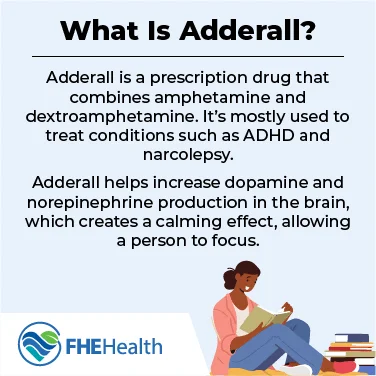
Adderall is the brand name for amphetamine mixed salts (d-amphetamine and l-amphetamine), a Schedule II controlled substance prescribed primarily to treat ADHD and narcolepsy:
- It works by increasing the release of dopamine and norepinephrine in the prefrontal cortex and striatum — directly addressing the neurochemical deficits associated with ADHD
- It is classified as Schedule II by the DEA — meaning it has accepted medical uses but also “a high abuse potential”
- American Addiction Centers: “Adderall is the brand name of the drug amphetamine-dextroamphetamine, a prescription medication primarily used to treat symptoms of ADHD by enhancing concentration and focus levels”
- Approximately 4.3 million people 12 and older misused prescription stimulants in 2022 per NSDUH data — misuse is highest among young adults 18–25 at 3.7% of that demographic
For Diagnosed ADHD Patients: The Benefit Side of the Equation
Before examining the risks, the established therapeutic benefits must be weighed — because for diagnosed patients, these are substantial and well-documented:
Clinical Efficacy
- A PubMed-indexed RCT found Adderall “highly efficacious” in youth with ADHD: “well-tolerated with a side effect profile similar to that reported for other psychostimulants”
- The long-term Adderall XR Phase III clinical trial showed sustained improvement across the full trial period; the Medical News Today report noted that “95.9% of side effects occurred in the first month and diminished over time”
- International Journal of Neuropsychopharmacology: “Both Adderall and methylphenidate prevent worsening and, for a majority of patients, lead to improvements that are well into the normal range“
Population-Level Outcomes for ADHD
The NIH’s NCBI 2024 clinical workshop on balancing risks and benefits put the stakes plainly:
- “Appropriate treatment for ADHD can be transformational, conferring psychological, social, academic, and occupational benefits while reducing a person’s risk of negative outcomes such as SUD [substance use disorder], tobacco use, car accidents, criminal behaviour, unwanted pregnancy, financial debt, multiple jobs, and premature death, along with the societal costs they entail”
This is the foundational counterweight to every risk discussed below — for diagnosed ADHD patients, the risks of not treating the condition are also real and measurable.
The Risks: What the Evidence Actually Shows
Cardiovascular Effects — The Most Important Physical Risk
The cardiovascular risk of Adderall is the most studied and most clinically significant physical risk — and it is nuanced:
Acute Cardiovascular Effects
- Adderall consistently and predictably raises both blood pressure and heart rate in the short term — this is well-established
- PMC cardiovascular dilemma review (NIH): “The most commonly reported adverse cardiovascular effects are elevated blood pressure and heart rate, seen in both short- and long-term treatment trials. This rise is generally thought to be statistically but not clinically significant” for most patients
- In healthy adult clinical trials, only 3% of patients experienced clinically significant cardiovascular side effects including hypertension, palpitation, or tachycardia
- Harvard Health: “New research suggests stimulants may cause a short-term spike in the risk of heart attacks, strokes, and arrhythmias” — but crucially, “over the longer term (6–12 months), people taking stimulants did not experience heightened heart-related risks compared with non-users”
Long-Term Cardiovascular Risk — The 2024 ACC Landmark Study
The most significant 2024 cardiology finding presented at the American College of Cardiology Annual Scientific Session:
- Young adults prescribed stimulants (Adderall and Ritalin) were 17% more likely to develop cardiomyopathy (weakened heart muscle) at 1 year and 57% more likely at 8 years vs. non-users
- However: “The overall risk of cardiomyopathy remained relatively low even when stimulants were used long-term”
- Lead researcher Pauline Gerard: “The longer you leave patients on these medications, the more likely they are to develop cardiomyopathy, but the risk of that is very low“
- MDedge reporting on the large Swedish nested case-control study (2023): Long-term ADHD medication use was associated with increased risk of hypertension and arterial disease — but not arrhythmias, heart failure, ischemic heart disease, thromboembolic disease, or cerebrovascular disease
- The NIH 2024 workshop confirmed the Swedish population data: “A 50–70% increased risk of hypertension and arterial disease, though there was no association with arrhythmias, heart failure, or cerebrovascular disease”
Clinical bottom line: Real but small cardiovascular risk — primarily hypertension and arterial disease with long-term use; no clear association with the most severe cardiovascular outcomes
Who Is at Elevated Cardiovascular Risk
Adderall carries disproportionately higher cardiovascular risk in:
- People with pre-existing heart conditions, structural cardiac abnormalities, or hypertension
- People with a family history of sudden cardiac death or cardiomyopathy
- People misusing Adderall at suprapherapeutic doses
- A new 2026 Mayo Clinic study: “College students using Adderall as a study aid could be harming their heart health” — with measurably different cardiac stress markers in illicit users vs. non-users
Brain and Cognitive Effects
For Diagnosed ADHD Patients at Therapeutic Doses
- Healthline: “Taking Adderall under a doctor’s supervision isn’t usually associated with permanent brain changes. A doctor can adjust your dose to reduce or eliminate unwanted side effects”
- LIV Hospital’s 2026 research summary: “Current research suggests that properly prescribed ADHD medications do not cause permanent brain damage, though monitoring is needed due to potential cardiovascular and psychiatric side effects”
- PMC 2008 review (NIH): “Although [amphetamines] have long been used effectively to treat ADHD, recent studies have raised the possibility that they may have long-term adverse effects on the brain” — while acknowledging the evidence remains inconclusive at therapeutic doses
For Long-Term and High-Dose Use
- Scientific American: “A smattering of recent studies, most involving animals, hint that stimulants could alter brain structure and function in ways that may depress mood, boost anxiety, and lead to cognitive deficits contrary to their short-term effects”
- ClearVue Health: “Chronic use, especially at high doses, may lead to lasting changes in brain chemistry — particularly in the dopamine system — potentially reducing cognitive abilities over time“
- McGill University’s SLIPOB (Study of Long-term Impacts of Psychostimulants on Brain) found a negative association between cumulative psychostimulant exposure and hippocampal subfield volume — a finding relevant to memory function
For Healthy Individuals Without ADHD
- ClearVue Health analysis of peer-reviewed literature: “Adderall may improve focus in healthy people by raising dopamine levels, but evidence for cognitive enhancement is mixed, and long-term use can pose serious risks to brain health”
- For people without ADHD, whose dopamine systems are not deficit-driven, Adderall produces overstimulation rather than normalisation — a fundamentally different pharmacological context with a less favourable risk-benefit ratio
Psychiatric and Mental Health Effects
Adderall carries a documented risk of psychiatric side effects — ranging from common to rare but serious:
American Addiction Centers: “A 2006 study estimated that about 1 in 400 patients might suffer from suicidal thoughts or psychotic behaviours when taking ADHD stimulant medications even as directed. The risks may go up with nonmedical use”.
Growth Effects in Children
One of the most studied and clinically significant risks specific to paediatric use:
- GoodRx’s clinical review: Adderall can cause slowed growth in children — reduced weight and height velocity are well-documented side effects
- The growth effect is considered dose-dependent and is most significant with continuous (non-drug holiday) use
- McGill University’s SLIPOB study specifically monitors long-term psychostimulant effects on brain development, noting that “recent studies have raised concerns that long-term exposure may affect aspects of brain development”
- Harvard Medical School’s Dr. Joseph Biederman’s long-term Adderall XR trial nonetheless found “adults with ADHD can benefit from treatment with ADDERALL XR over the long-term” — suggesting that for diagnosed patients, the growth concern is managed rather than disqualifying
Dependency, Tolerance, and Addiction
Adderall is classified Schedule II specifically because its addiction potential is real and significant:
- The DEA classification acknowledges it as “the highest level of control for a drug with accepted medicinal uses”
- Hazelden Betty Ford: “Over time, your brain can become dependent on the drug’s effects, making it harder to function without it”
- American Addiction Centers: “Chronic Adderall use can cause withdrawal symptoms when use is ceased or reduced — including fatigue, cravings, dysphoric mood, nightmares, increased appetite, irritability, and psychomotor agitation”
- For prescribed patients at therapeutic doses, physical dependence (requiring dose to function normally) is distinct from addiction (compulsive use despite harm) — both are risks but at very different prevalence rates
Gastrointestinal and Other Physical Effects
Less serious than cardiovascular risks but commonly experienced:
- Appetite suppression: Near-universal at therapeutic doses; risk of unhealthy weight loss with chronic use
- Insomnia: Dose-dependent and timing-dependent
- Gastrointestinal: Constipation, abdominal pain, nausea, diarrhoea — from slowed digestive motility
- Dry mouth: Very common
- Headache: Common, especially in early treatment
- WebMD: “The most frequently reported drug-related adverse events included dry mouth, loss of appetite, insomnia and headache” — most occurring in the first month and diminishing over time
Sex and Gender Differences
Adderall’s pharmacokinetics differ meaningfully between biological sexes:
- FDA data: When doses were not body-weight adjusted, women processed 20–30% more amphetamine than men — normalising when doses were weight-adjusted
- Women’s follicular phase (first 14 days of the menstrual cycle): estrogen enhances dopamine release, amplifying both the therapeutic effects and side effects of Adderall — including stronger cravings and physical dependency
- Women report proportionally higher rates of anxiety, insomnia, appetite suppression, and dependency-related effects
The Misuse Context: When the Risk-Benefit Ratio Clearly Flips
For non-prescribed use — as a study aid, weight loss drug, or recreational stimulant — the evidence is clearer:
- ClearVue Health: “Using Adderall for cognitive enhancement without medical supervision carries significant long-term risks”
- The 2026 Mayo Clinic study: college students using Adderall as a study drug showed measurable cardiac stress markers distinct from non-users
- The cognitive enhancement evidence in healthy individuals is actually mixed — studies show minimal enhancement for complex cognitive tasks, with the most consistent benefit being for boring, repetitive tasks only
- American Addiction Centers: “Nonmedical use of the drug increases the odds and severity of negative effects”
- The risk of stimulant use disorder among non-prescribed users is substantially higher than among patients whose diagnosis and dose are clinically managed
Is Adderall Bad for the Brain Long-Term? The Balanced Evidence
The neurological question is the one with the most scientific uncertainty:
Evidence suggesting it is not damaging at therapeutic doses:
- Healthline: “Taking Adderall under a doctor’s supervision isn’t usually associated with permanent brain changes“
- LIV Hospital (2026): “Properly prescribed ADHD medications do not cause permanent brain damage“
- Long-term Phase III clinical trial: benefits sustained over years; side effects diminished after month 1
Evidence suggesting caution is warranted:
- McGill SLIPOB: negative association between cumulative psychostimulant exposure and hippocampal subfield volume
- Scientific American: animal studies suggest stimulants “could alter brain structure and function in ways that may depress mood, boost anxiety, and lead to cognitive deficits“
- PMC 2008 NIH review: “Recent studies have raised the possibility that [amphetamines] may have long-term adverse effects on the brain”
The honest scientific position in 2026:At prescribed therapeutic doses in diagnosed ADHD patients, the neurological risk is not clearly established as significant — but neither is it definitively ruled out. Long-term monitoring, dose minimisation, and regular clinical reassessment are the evidence-based approach.
Who Should Be Most Cautious About Adderall
The following populations face elevated risk from Adderall, warranting careful clinical evaluation before or during use:
- Pre-existing heart conditions or structural cardiac abnormality — risk of serious cardiovascular events is markedly higher
- Hypertension — Adderall-driven blood pressure elevation on an already-elevated baseline increases cardiovascular risk meaningfully
- Family history of sudden cardiac death — absolute contraindication per the FDA label
- Bipolar disorder — Adderall can trigger manic episodes; mood stabiliser coverage is typically required
- Personal or family history of psychosis — risk of stimulant-induced psychosis is meaningfully elevated
- Children and adolescents — growth effects, brain development concerns, and higher susceptibility to mood side effects warrant careful dose management and drug holidays
- Pregnant women — FDA Category C (risk cannot be ruled out); potential for preterm birth and neonatal withdrawal
- People with substance use history — higher addiction risk given Adderall’s Schedule II abuse potential
FAQ — Is Adderall Bad for You?
Is Adderall safe to take long-term?For diagnosed ADHD patients at prescribed doses, long-term use is generally considered safe with monitoring — but not without risk. The clearest documented long-term risks are a small increased risk of hypertension and arterial disease (Swedish population data: 50–70% increased risk), and modest cardiomyopathy risk accumulating over 8 years (ACC 2024: 57% increased relative risk, but absolute risk remains low).
Is Adderall bad for your heart?It causes acute elevation of blood pressure and heart rate at every dose — considered statistically but “not clinically significant” in most healthy patients. Long-term, it is associated with hypertension and arterial disease risk, but not with arrhythmias, heart failure, ischemic heart disease, or stroke in the largest population studies. The risk is higher for those with pre-existing cardiac conditions.
Is Adderall bad for your brain?At therapeutic doses in diagnosed patients, current evidence does not show permanent brain damage. Animal studies and some human data raise concerns about long-term effects on mood, anxiety, and hippocampal volume with cumulative exposure. Neurotoxic effects are most clearly demonstrated at suprapherapeutic/misuse-level doses.
Is Adderall bad for you without ADHD?The risk-benefit equation is unfavourable without a diagnosis. Cognitive enhancement in healthy individuals is modest and inconsistent; the full suite of cardiovascular, psychiatric, and dependency risks remains. The 2026 Mayo Clinic study found measurable cardiac stress in college students using Adderall illicitly.
Is Adderall addictive?Yes — the DEA classifies it as Schedule II for this reason. Physical dependence (requiring the drug to maintain normal function) is common with long-term use; full stimulant use disorder is less common in clinically managed patients but elevated in misuse contexts.
Is Adderall bad for kids?For children with confirmed ADHD diagnoses, the evidence shows it is effective and generally tolerable — with slowed growth being the most consistent concern. The brain development question remains under active investigation (McGill SLIPOB study). Drug holidays (breaks during non-school periods) are commonly recommended to mitigate growth effects.
The Bottom Line
Adderall is not categorically “bad for you” or categorically “safe” — the answer is entirely context-dependent. For a diagnosed ADHD patient at therapeutic doses under clinical supervision, decades of evidence support meaningful benefits — improved quality of life, reduced accident risk, better occupational and academic outcomes, and reduced rates of substance use disorder — with a risk profile that is real but manageable through monitoring. The primary confirmed long-term physical risks are cardiovascular: a modestly elevated risk of hypertension and arterial disease (Swedish population data), and a small but dose-duration-dependent cardiomyopathy risk (ACC 2024) — but not the more severe outcomes of arrhythmia, stroke, or heart failure at therapeutic doses. For healthy individuals without ADHD using it recreationally or as a study aid, the risk-benefit ratio flips unfavourably — cognitive benefits are inconsistent and modest, while the cardiovascular, psychiatric, neurological, and dependency risks are the same or greater. The honest 2026 clinical position is: prescription Adderall for confirmed ADHD is a legitimate, evidence-supported treatment whose risks are manageable with proper prescribing and monitoring; non-prescribed use carries those same risks without the established benefits.
Is adderall bad for you Hobart
Is adderall bad for you Devonport
Is adderall bad for you Launceston
Is adderall bad for you Tasmania
Is adderall bad for you Victoria
Is adderall bad for you Queensland
Is adderall bad for you Canberra
Is adderall bad for you Australian Capital Territory
Is adderall bad for you South Australia
Is adderall bad for you New South Wales
Is adderall bad for you Darwin
Is adderall bad for you Ghan
Is adderall bad for you Northern Territory
Is adderall bad for you Australia
Is adderall bad for you Austria
Is adderall bad for you Germany
Is adderall bad for you United Kingdom
Is adderall bad for you Sweden
Is adderall bad for you Denmark
Is adderall bad for you Norway
Is adderall bad for you Finland
Is adderall bad for you Iceland
Is adderall bad for you Netherlands
Is adderall bad for you Spain
Is adderall bad for you Ireland
Is adderall bad for you Switzerland
