How long does slow release adderall last? Slow-release Adderall — officially called Adderall XR (extended release) — is designed to last 10–12 hours from a single morning dose. In clinical reality, the range is wider: most patients experience 8–12 hours of consistent ADHD symptom control, while a significant minority report only 5–8 hours of effective coverage due to individual metabolism, dose, and pharmacokinetic factors. A higher dose does not meaningfully extend duration — it increases the intensity of effect, not how long it lasts.
Introduction
“Slow release” Adderall is the term many patients, parents, and prescribers use informally for Adderall XR — the extended-release capsule formulation that delivers medication across a full day rather than requiring multiple doses. Understanding how long it actually lasts — and why it sometimes lasts less than advertised — is one of the most practically important things an Adderall patient can know.
The clinical answer (10–12 hours) and the real-world patient experience (often 6–10 hours) frequently diverge, and understanding why closes the gap between what patients expect and what they actually get. This guide covers the full duration picture: how slow-release Adderall works, how long it lasts by dose, the factors that shorten or extend its window, what real patients report, and what to do when it is not lasting long enough to cover your day.
What “Slow Release” Adderall Actually Is
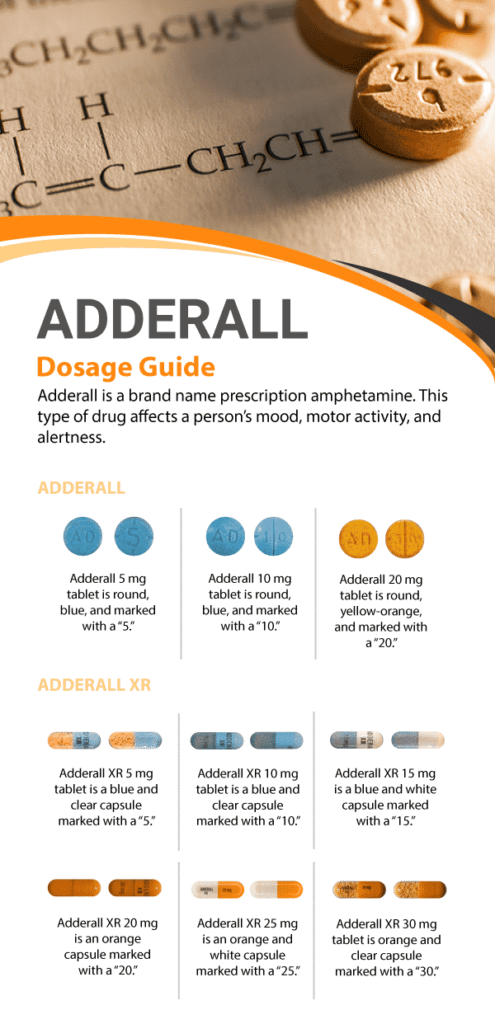
“Slow release,” “extended release,” “XR,” and “ER” all refer to the same formulation: Adderall XR— amphetamine mixed salts in an extended-release capsule:
- Comes in capsule form in doses of 5 mg, 10 mg, 15 mg, 20 mg, 25 mg, and 30 mg
- Taken once daily in the morning
- Distinguished from Adderall IR (immediate release), which comes as tablets and lasts 4–6 hours per dose
- The only licensed slow-release form of mixed amphetamine salts — Adderall XR is the brand name; generic versions contain the same active ingredient and use the same dual-bead delivery mechanism
How Slow Release Adderall Works: The Dual-Bead Mechanism
The 10–12 hour duration of Adderall XR is produced by a precisely engineered delivery system inside each capsule:
The Two Types of Beads
Each Adderall XR capsule contains two equal populations of beads:
Immediate-release beads (50% of the total dose):
- Dissolve immediately upon contact with stomach fluid
- Release the first half of the dose within 1–2 hours of ingestion
- Produce the first concentration peak at approximately 3–4 hours after taking the capsule
Delayed-release beads (50% of the total dose):
- Coated with an enteric polymer that resists dissolution in the low-pH environment of the stomach
- Pass intact into the small intestine, where the more alkaline pH dissolves the enteric coating
- Release the second half of the dose approximately 4 hours after the first release — roughly 4–5 hours after ingestion
- Produce the second concentration peak at approximately 7–8 hours after taking the capsule
The Resulting Pharmacokinetic Profile
This dual-bead system creates a biphasic concentration curve in the bloodstream:
- Two distinct concentration peaks rather than a single spike and crash
- Smoother, more sustained effect than a single large IR dose
- Gradual decline after the second peak — slower offset than IR, producing a gentler wearing-off rather than an abrupt crash
- Maximum plasma concentration reached approximately 8 hours after dosing
Critical detail for capsule opening: The delayed-release bead coating is essential to the extended mechanism. If you open the capsule and chew the beads, you destroy the enteric coating — the second half of your dose is released immediately alongside the first half, converting an XR dose into what is functionally a large IR dose. Effects will last only 4–6 hoursinstead of 10–12. If you need to open the capsule (e.g., for a child who cannot swallow capsules), sprinkle the beads onto a small amount of soft food — such as applesauce — and swallow without chewing.
How Long Does Slow Release Adderall Last: The Clinical Answer
By Dose
Clinical studies and pharmacokinetic data show that higher doses of Adderall XR produce stronger effects but do not meaningfully extend the duration of action:
The key clinical finding on dose and duration: Increasing the dose of Adderall XR from 10 mg to 30 mg does not extend how long it works — it increases the intensity of therapeutic effect. The 12-hour design is pharmacokinetically fixed by the bead delivery system, not the amount of active ingredient.
The Pharmacokinetic Timetable
For a typical adult taking Adderall XR 20 mg at 7:30 AM:
- ~8:30 AM — Onset of effects (30–60 minutes after ingestion)
- ~10:30–11:30 AM — First peak; strongest focus and symptom control
- ~3:30–4:00 PM — Second peak from delayed-release beads; second wave of symptom control
- ~5:00–7:30 PM — Gradual tapering of effects
- ~7:30 PM — Full 12 hours elapsed; therapeutic window complete for most patients
The Real-World Duration Gap: Why Patients Experience Shorter Duration
The most important practical question for Adderall XR patients: why does slow-release Adderall often feel like it wears off in 6–8 hours rather than the labelled 12?
Community-reported experiences across ADHD forums reveal a wide range:
- Some patients report only 4–6 hours of benefit before the medication feels completely worn off
- Others report a reliable 8–10 hours
- Some describe feeling the first phase but barely noticing the second
- A small number report the medication keeping them awake well past the expected window
This variability is not imaginary — it is explained by specific, well-characterised pharmacokinetic factors:
Rapid Metabolisers
The most common explanation for XR lasting only 5–7 hours is fast metabolism:
- Genetic variants in the CYP2D6 enzyme cause some individuals to process amphetamine significantly faster than average
- One ADHD community member had a pharmacogenomic test confirming a gene variant causing ultra-rapid amphetamine metabolism — explaining years of inexplicably short medication duration
- Rapid metabolisers can process both bead populations faster than the designed release schedule intends — producing a compressed timeline
Gastrointestinal Transit Rate
The delayed-release beads depend on reaching the alkaline pH of the small intestine before dissolving:
- Patients with faster GI motility (faster gut transit) may move the beads through the stomach and intestine more quickly, accelerating the second-peak release and compressing the coverage window
- Patients with slower gut motility may experience delayed onset and extended duration
Urine pH and Renal Clearance
As detailed in the “How Long Does Adderall Last” article, urine pH is a major determinant of how quickly amphetamine is excreted:
- Acidic urine (from Vitamin C supplements, citrus, ascorbic acid) dramatically speeds excretion — shortening effective duration
- Alkaline urine slows excretion — extending duration
- Patients who take large doses of Vitamin C, regularly drink large amounts of citrus juice, or take acidifying medications may find their XR wears off hours earlier than for others on the same dose
Dose Too Low
At lower doses (5–10 mg), the second bead release may not provide sufficient clinical effect, making the medication feel like it has worn off even though the second bead release has occurred:
- The second phase’s effect is dependent on reaching a therapeutic concentration in the brain — if the dose is too low, the second release may not produce a noticeable effect
- This is not XR “not lasting” — it is XR being underdosed for the individual patient
Tolerance
Patients who have been on the same dose for extended periods may develop pharmacodynamic tolerance — the brain adapts to Adderall’s presence, requiring higher concentrations to produce the same effect:
- Duration of action does not decrease with tolerance — the pharmacokinetics remain constant
- But the perceived therapeutic effect may feel like it wears off sooner because the therapeutic threshold has risen relative to concentration levels in the late window
- This is different from the medication actually having a shorter duration — it is the brain requiring more drug to produce the same effect
The Concentration-Effect Lag (Clockwise Hysteresis)
Adderall stops producing noticeable therapeutic effects before it leaves the bloodstream — a pharmacological phenomenon called clockwise hysteresis:
- The concentration-effect relationship is not linear — the brain’s response to Adderall changes as concentrations fall
- Patients can experience loss of focus and energy in the afternoon while Adderall is still technically present in meaningful concentrations in their blood
- This is normal and expected — it does not mean the XR has “failed” or that the second bead release did not work
Slow Release Adderall Duration: What Real Patients Report
Community data from ADHD forums provides the most granular picture of real-world XR duration:
Common patterns reported across r/ADHD, r/adhdwomen, and clinical forums:
- “A solid 5–6 hours of peak focus” — the most commonly reported therapeutic window in community surveys, well below the labelled 12 hours
- “4–6 hours and then my afternoon is just mediocre” — partial second-phase effect commonly reported, with diminishing but not absent coverage in hours 6–10
- “I take 20 mg XR at 7:30 and it lasts the full work day” — confirming that full 10–12 hour coverage is achievable and common for many patients at effective doses
- “XR only lasted max 4 hours” — outlier but real, attributable in some cases to confirmed rapid metabolism via pharmacogenomic testing
- “One 15 mg XR keeps me awake for days” — extreme outlier at the opposite end of the spectrum, likely reflecting ultra-slow metabolism or other amplifying factors
The honest clinical picture: official 12-hour duration is achievable and common, but the practical effective window for a substantial minority of patients is 6–9 hours — particularly at lower doses, in fast metabolisers, or in patients taking Vitamin C or acidic foods near their dose.
Slow Release vs Immediate Release: Duration Comparison
What to Do When Slow Release Adderall Does Not Last Long Enough
This is the most clinically actionable part of this guide — if your Adderall XR consistently wears off before your day is done, there are clear options:
Option 1 — Afternoon IR Booster Dose
The first-line clinical solution for XR wearing off in the mid-afternoon:
- Your prescriber adds a small Adderall IR dose (typically 5–10 mg) to be taken in the early-to-mid afternoon — usually around 12:00–3:00 PM
- This bridges the coverage gap between XR wearing off and end of your work or school day
- Timing matters — taking the IR booster before the XR has fully worn off (rather than after) produces smoother coverage without a gap
- Ask your prescriber to add a small IR prescription alongside your XR for this purpose
Option 2 — Dose Increase
If you are at a lower dose of XR (5–15 mg) and the medication wears off early, the problem may be underdosing rather than a formulation limitation:
- Increasing the XR dose in 5 mg increments at weekly intervals may bring the second-phase release to a therapeutically effective concentration
- A higher dose does not extend duration but may make the second-phase effect clinically noticeable where it was previously sub-therapeutic
- Discuss with your prescriber — do not self-adjust
Option 3 — Switch to Vyvanse (Lisdexamfetamine)
If Adderall XR consistently fails to provide sufficient duration regardless of dose adjustment, switching formulations may be warranted:
- Vyvanse (lisdexamfetamine) is a prodrug — it must be metabolised to d-amphetamine after absorption, which slows its onset and produces a smoother, longer-lasting profile
- Vyvanse provides approximately 13–14 hours of therapeutic coverage — meaningfully longer than the 8–12 hours of Adderall XR
- Community and clinical data consistently identify Vyvanse as having a smoother, more gradual wearing-off than Adderall XR — with less rebound
- The prodrug mechanism also makes Vyvanse harder to misuse, which some prescribers prefer
Option 4 — Switch to Concerta (OROS Methylphenidate)
Clinical guidance identifies Concerta (osmotic-controlled release methylphenidate) as a preferred alternative for patients experiencing XR wearing off:
- Concerta provides 12-hour continuous coverage through its OROS (osmotic release) mechanism — a continuously ascending concentration profile rather than a biphasic one
- Some clinical references characterise Concerta’s practical duration as longer and more consistent than Adderall XR’s biphasic delivery
- It is a different drug class (methylphenidate rather than amphetamine) — works similarly for ADHD but with a different mechanism and side effect profile
Option 5 — Adjust Timing
Taking XR slightly later in the morning — e.g., 9:00 AM rather than 7:00 AM — shifts the coverage window to extend later into the afternoon and evening:
- Practical only if morning coverage is not needed early in the day (e.g., later work start, no morning commute requiring focus)
- Tradeoff: later timing may delay sleep onset if the 10–12 hour window now extends to 9–11 PM
Option 6 — Pharmacogenomic Testing
If you are a suspected rapid metaboliser — Adderall XR consistently lasting only 4–6 hours regardless of dose — pharmacogenomic testing can confirm whether you have a CYP2D6 variant affecting amphetamine metabolism:
- Testing is available through most major clinical labs and some direct-to-consumer services
- A confirmed rapid-metaboliser result meaningfully changes the clinical approach — longer-acting formulations, higher doses, or alternative medications are all options
- Ask your prescriber about pharmacogenomic testing if standard approaches to XR duration have not resolved the problem
Slow Release Adderall and Sleep
The most common timing-related concern with Adderall XR is sleep disruption — if it lasts 10–12 hours, a late morning dose means active medication at bedtime:
Recommended latest morning dose time for sleep by bedtime:
- If you sleep at 10 PM: take XR no later than 8:00–9:00 AM
- If you sleep at 11 PM: take XR no later than 9:00–10:00 AM
- If you sleep at midnight: taking XR by 10:00 AM gives a 14-hour buffer
If XR consistently disrupts sleep despite morning dosing:
- This may indicate that XR is lasting longer for you than the population average — a slow-metaboliser pattern
- Dose reduction or switching to IR may be warranted
- Discuss with your prescriber rather than skipping doses unpredictably
FAQ — How Long Does Slow Release Adderall Last?
How long does slow release Adderall (XR) last?Adderall XR is designed to last 10–12 hours from a single morning dose. In real-world patient experience, the effective therapeutic window is typically 8–12 hours for most patients, with a significant minority reporting 5–8 hours.
Why does my slow release Adderall only last 5–6 hours?The most common reasons are: faster-than-average metabolism (possibly genetic), acidic urine pH from Vitamin C supplements or citrus reducing drug excretion time, underdosing (lower dose not producing detectable second-phase effect), faster GI motility compressing the bead release schedule, or tolerance. Pharmacogenomic testing can confirm a metabolic explanation.
Does a higher dose of slow release Adderall last longer?No — increasing the dose of Adderall XR increases the intensity of effect, not the duration. The 12-hour design is fixed by the bead delivery system. Higher doses produce the same approximately 12-hour window but with more robust symptom control throughout.
How is slow release Adderall different from regular Adderall?Regular Adderall (IR) lasts 4–6 hours per dose and is taken 2–3 times daily. Slow release Adderall (XR) uses a dual-bead mechanism to release medication in two phases over 10–12 hours — taken once daily in the morning. XR produces a smoother profile with less pronounced rebound than multiple IR doses.
What should I do if slow release Adderall wears off before the end of my day?Talk to your prescriber — do not self-adjust. Options include: a small afternoon IR booster dose (5–10 mg at 12–3 PM); a dose increase to bring the second-phase effect to therapeutic levels; switching to Vyvanse (13–14 hours of coverage) or Concerta (12 hours); or adjusting the timing of your XR dose.
Can you open slow release Adderall capsules?Yes — the capsule can be opened and the beads sprinkled on soft food (such as applesauce). However, you must not chew the beads — doing so destroys the delayed-release coating and converts the XR dose into an effectively immediate-release dose, lasting only 4–6 hours instead of 10–12.
How long after taking slow release Adderall can I sleep?Most prescribers recommend a 10–12 hour gap between your XR dose and bedtime. For a 10 PM bedtime, take XR no later than 8–9 AM. If XR still disrupts sleep despite morning dosing, discuss dose reduction or formulation switch with your prescriber.
The Bottom Line
Slow-release Adderall (Adderall XR) is clinically designed for 10–12 hours of once-daily ADHD symptom control — achieved through a dual-bead delivery system that releases medication in two phases, approximately 4 hours apart. In practice, the effective window for many patients falls in the 8–10 hour range, with a meaningful minority experiencing only 5–7 hours of benefit due to rapid metabolism, urine pH factors, lower doses, or GI transit variability. A higher dose does not extend duration — it intensifies effect. When slow-release Adderall consistently fails to cover your day, that is a clinical problem with defined solutions: afternoon IR booster doses, dose optimisation, or switching to a longer-acting formulation like Vyvanse (13–14 hours). Any duration adjustment should go through your prescriber — the right solution depends on why the XR is wearing off early, not just that it is.
How long does slow release adderall last Hobart
How long does slow release adderall last Devonport
How long does slow release adderall last Launceston
How long does slow release adderall last Tasmania
How long does slow release adderall last Victoria
How long does slow release adderall last Queensland
How long does slow release adderall last Canberra
How long does slow release adderall last Australian Capital Territory
How long does slow release adderall last South Australia
How long does slow release adderall last New South Wales
How long does slow release adderall last Darwin
How long does slow release adderall last Ghan
How long does slow release adderall last Northern Territory
How long does slow release adderall last Australia
How long does slow release adderall last Austria
How long does slow release adderall last Germany
How long does slow release adderall last United Kingdom
How long does slow release adderall last Sweden
How long does slow release adderall last Denmark
How long does slow release adderall last Norway
How long does slow release adderall last Finland
How long does slow release adderall last Iceland
How long does slow release adderall last Netherlands
How long does slow release adderall last Spain
How long does slow release adderall last Ireland
How long does slow release adderall last Switzerland