
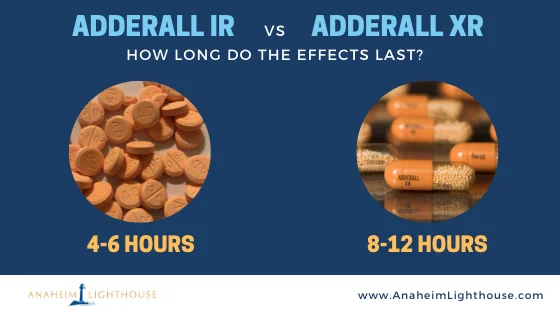
How long does adderall last? Adderall IR (immediate release) lasts approximately 4–6 hours per dose, while Adderall XR (extended release) lasts approximately 10–12 hours from a single morning dose. These are the therapeutic windows — the time during which the medication actively controls ADHD symptoms. The drug itself stays in your body significantly longer: Adderall has a plasma half-life of approximately 9–14 hours, meaning it takes one to three days for the medication to fully clear your system.
Introduction
How long Adderall lasts is one of the most practically important questions for patients managing ADHD — it determines how many doses you take per day, when you take them, when you can expect the medication to wear off, when to expect sleep to be possible, and how to plan your schedule around its coverage window.
The answer is not a single number. It varies by formulation (IR vs XR), dose, individual metabolism, age, body weight, urine pH, and kidney function. This guide breaks down every dimension of Adderall duration: how long the therapeutic effects last for each formulation, the pharmacokinetics that explain why, all the factors that push that window shorter or longer, what the “wearing off” process looks like, and — for those with a drug test to navigate — precise detection windows across every testing method.
The Core Answer: IR vs XR Duration at a Glance
Adderall IR Duration: The Detailed Picture
How Long Does Adderall IR Last?
Adderall IR (immediate-release tablets — 5 mg, 7.5 mg, 10 mg, 12.5 mg, 15 mg, 20 mg, 30 mg) provides therapeutic effects for 4–6 hours per dose, with some sources citing up to 8 hours at higher doses for some individuals:
- Onset: Effects begin approximately 30–60 minutes after oral ingestion
- First hour: Gradual onset — focus and alertness begin to improve
- Peak effects: Reached at approximately 1–3 hours after the dose; peak plasma concentration at approximately 3 hours
- Duration of effects: Sustained therapeutic effect for 4–6 hours from the time of ingestion
- Wearing off: Effects gradually taper from hour 4 onward; fully worn off by hour 6 for most adults
Why Adderall IR Requires Multiple Daily Doses
Because therapeutic effects last only 4–6 hours, covering a full waking day requires multiple doses:
- A typical adult prescribed Adderall IR takes it 2–3 times per day — morning, mid-day, and sometimes early afternoon
- The afternoon dose is timed to extend coverage through late-afternoon work or homework without extending the therapeutic window into the evening and disrupting sleep
- Prescribers generally advise the last IR dose no later than mid-afternoon (approximately 3–4 PM for most patients) to allow the medication to wear off sufficiently before bedtime
Adderall XR Duration: The Detailed Picture
How Long Does Adderall XR Last?
Adderall XR (extended-release capsules — 5 mg, 10 mg, 15 mg, 20 mg, 25 mg, 30 mg) provides therapeutic effects for 10–12 hours from a single morning dose:
- Onset: Effects begin approximately 30–60 minutes after oral ingestion
- First peak: First concentration peak at approximately 3–4 hours (from the immediate-release bead component)
- Second peak: Second concentration peak at approximately 7–8 hours (from the delayed-release bead component)
- Maximum plasma concentration (Cmax): Reached approximately 8 hours after dosing
- Total therapeutic duration: 10–12 hours of consistent ADHD symptom control from a single morning dose
How the XR Delivery System Works
The extended duration of Adderall XR is produced by a dual-bead delivery system inside each capsule:
- Each XR capsule contains two types of beads: 50% immediate-release beads and 50% delayed-release beads
- The immediate-release beads dissolve as soon as they reach the stomach, releasing the first half of the dose immediately
- The delayed-release beads are coated with an enteric polymer that resists dissolution in stomach acid; they dissolve only when they reach the more alkaline pH of the small intestine, releasing the second half of the dose approximately 4 hours later
- This creates the characteristic biphasic concentration curve — two peaks rather than one — providing smoother, more sustained coverage than a single large IR dose would
- The result: consistent symptom control without the “roller-coaster” effect of taking multiple IR doses
Taking Adderall XR: Swallowing vs. Opening the Capsule
Adderall XR capsules can be swallowed whole or opened and the beads sprinkled on a small amount of applesauce:
- Do not chew the beads — chewing destroys the enteric coating on the delayed-release beads and converts XR into an essentially immediate-release dose, losing the extended duration
- The beads must be swallowed whole to preserve the delayed-release mechanism
- This also means patients who accidentally chew an XR capsule should expect IR-duration effects (4–6 hours) rather than XR-duration effects
Adderall Half-Life and Clearance: How Long It Stays in Your Body
The therapeutic window and the pharmacokinetic presence of the drug are two different things:
Half-Life
Adderall’s plasma half-life — the time it takes for blood concentration to reduce by 50% — is approximately 9–14 hours in adults:
- d-amphetamine (dextroamphetamine): half-life approximately 10 hours in adults
- l-amphetamine (levoamphetamine): half-life approximately 13 hours in adults
- In adolescents (aged 13–17, <75 kg): half-life approximately 11 hours
- In children (aged 6–12): half-life approximately 9 hours
What this means practically: The medication stops producing noticeable therapeutic effects well before it leaves the bloodstream — a phenomenon called clockwise hysteresis. You stop feeling the focus benefit of Adderall IR after 4–6 hours, but the drug is still present in your blood at meaningful concentrations for 12–24+ hours after that dose.
Full Clearance (Time for Drug to Leave the Body)
Full elimination (typically defined as 5 half-lives) takes approximately 48–70 hours after the last dose in most adults:
- Most Adderall is eliminated within 36–70 hours of use
- The drug itself and its metabolites can persist longer in urine, saliva, and hair
How Long Does Adderall Last: By Dose
Higher doses produce both more intense effects and a marginally longer duration window:
| Dose | Formulation | Typical Duration |
|---|---|---|
| 5–10 mg | IR | 4–5 hours |
| 15–20 mg | IR | 4–6 hours |
| 30 mg | IR | 5–8 hours |
| 5–10 mg | XR | 8–10 hours |
| 20–30 mg | XR | 10–12 hours |
Clinical data from Adderall XR studies confirms that higher doses (20–30 mg) show both greater efficacy and longer duration of effects compared to lower doses (10 mg). However, the extended duration at higher doses also means later sleep onset — a practical trade-off that prescribers discuss with patients.
What Affects How Long Adderall Lasts for You
The 4–6 hour and 10–12 hour figures are population averages — your individual duration may be shorter or longer depending on several key variables:
1 — Metabolism
The single biggest individual variable in Adderall duration:
- Faster metabolism → faster processing → shorter duration of both effects and body presence
- Slower metabolism → longer processing → longer duration in the body, but not necessarily more therapeutic benefit (effects may extend, but so do side effects and sleep disruption risk)
- Metabolic rate is influenced by genetics (CYP2D6 enzyme polymorphisms in particular), age, body composition, and overall health
2 — Age
Age significantly changes Adderall’s pharmacokinetics:
- Children metabolise amphetamine faster — shorter half-life (~9 hours vs. ~10–14 hours in adults) and often shorter therapeutic windows per dose
- Older adults metabolise Adderall more slowly — the drug tends to stay longer in the system due to decreased renal clearance and liver function with age
- This is why children often need IR doses 2–3 times daily while some older adults may find XR effects persist well into the evening
3 — Body Weight and Composition
Body composition affects both dose optimisation and clearance rate:
- Higher body fat percentage: Adderall tends to accumulate in fatty tissue and may remain in the body longer
- Lean body mass: Associated with faster metabolism and shorter drug presence
- Body weight alone is not a reliable predictor of effective dose — clinical titration is always required
4 — Urine pH
This is one of the most clinically significant but least-discussed factors:
- Adderall is eliminated partly via the kidneys — its excretion rate is highly pH-dependent
- Acidic urine (lower pH): Adderall is eliminated faster — shorter duration of effects
- Alkaline urine (higher pH): Adderall is eliminated more slowly — longer duration in the body
- Foods and supplements that alkalinise urine (sodium bicarbonate/baking soda, citrate supplements) can extend Adderall’s duration and increase blood levels
- Foods and supplements that acidify urine (high-dose Vitamin C/ascorbic acid, cranberry juice) reduce Adderall blood levels and duration
Practical implication: Vitamin C supplements taken close to your Adderall dose can noticeably reduce its effectiveness and shorten its duration — a common patient complaint that is explained by this pH mechanism. Most prescribers advise not taking Vitamin C supplements within 1–2 hours of Adderall.
5 — Food and Timing
Food affects the onset of Adderall XR but not significantly its total duration:
- The FDA label for Adderall XR notes that a high-fat meal delays the time to first peak concentration by approximately 2.5 hours but does not affect total absorption
- This means taking XR with a high-fat breakfast delays onset but does not meaningfully shorten or lengthen the total therapeutic window
- For IR, food has a less significant effect on timing — onset may be slightly delayed after a large meal
6 — Kidney Function
Adderall is primarily eliminated through the kidneys via urine:
- Impaired kidney function slows clearance — patients with renal impairment retain Adderall in the body longer
- Prescribers typically start at lower doses and titrate more cautiously in patients with renal disease
7 — Tolerance
Patients who have taken Adderall for extended periods may find the therapeutic window feels shorter, even at the same dose:
- Tolerance to Adderall’s subjective effects (energy, mood lift) develops faster than tolerance to its cognitive benefits
- The medication’s ADHD therapeutic effects are generally more durable than its stimulant effects — patients on stable doses for years typically maintain therapeutic benefit
- Perceived shorter duration is often one of the earliest signs of developing tolerance, which should prompt a prescriber conversation rather than self-dose escalation
8 — Dose
As noted above, higher doses produce marginally longer therapeutic windows in addition to stronger effects. The relationship is not linear — there are diminishing returns at the highest doses — but in general, a 30 mg IR dose will last closer to 6–8 hours for many adults compared to 4–5 hours for a 5 mg dose.
The “Wearing Off” Experience: Adderall Rebound
As Adderall wears off, many patients experience what is called rebound — a temporary period of symptoms that can feel worse than baseline ADHD:
What rebound looks and feels like:
- Increased irritability and emotional reactivity
- Fatigue or low energy
- Difficulty concentrating
- Low mood or mild depressive feelings
- Increased appetite after hours of suppression
- Restlessness
Why it happens:
Rebound occurs because Adderall’s effect on dopamine and norepinephrine creates a state of elevated neurotransmitter activity during its active window. When the drug clears, neurotransmitter levels drop — often to slightly below the pre-dose baseline before returning to normal. This trough is what produces the rebound feeling.
Who experiences it more:
- Patients on higher doses relative to their optimal level
- Those who take IR without an afternoon dose, creating a sharp trough
- Patients sensitive to dopaminergic changes
How to manage it:
- Switching from IR to XR often significantly reduces rebound — the slower, more gradual wearing-off of XR creates a less pronounced trough
- A small afternoon IR “booster” dose can smooth the IR comedown
- Discuss with your prescriber — rebound is a clinical signal that your dosing schedule may need adjustment
How Long Does Adderall Last for Specific Populations
Children (Ages 6–12)
- Adderall IR: typically 4–5 hours per dose — often at the shorter end of the adult range due to faster paediatric metabolism
- Adderall XR: typically 8–10 hours from a morning dose, sometimes shorter in younger children
- School-day dosing with XR is designed to cover the 6–7 hour school day plus homework time
- Adderall XR 30 mg showed longer duration than lower doses in children 6–12 in clinical studies
Adolescents (Ages 13–17)
- Half-life approximately 11 hours — slightly longer than children, slightly shorter than adults
- Therapeutic duration similar to adults: IR 4–6 hours, XR 10–12 hours
Older Adults
- Slower renal clearance means Adderall may persist longer both therapeutically and in detection windows
- Higher risk of sleep disruption due to extended presence in the body — earlier dosing is often recommended
Drug Test Detection Windows
The drug itself and its metabolites remain detectable long after the therapeutic effects have worn off. This section is for patients with a valid prescription who need to understand detection windows:
Urine (Most Common Drug Test)
| User Type | Detection Window |
|---|---|
| Single/occasional dose | 1–3 days |
| Regular prescribed user | 3–4 days |
| Heavy/frequent use | Up to 4–7 days |
- Adderall XR specifically: typically detectable for 3–4 days in urine
- Urine pH is the single biggest variable affecting detection time — alkaline urine extends it, acidic urine shortens it
Blood
| Detection Window |
|---|
| 12–46 hours after last dose |
Blood tests have the shortest detection window but are the most accurate for current intoxication level. Adderall can be detected in blood for 24–46 hours after the last dose depending on dose and individual factors.
Saliva (Oral Fluid Test)
| Detection Start | Detection Window |
|---|---|
| As early as 20 minutes after ingestion | 20–50 hours after last dose |
Saliva tests detect Adderall almost immediately after ingestion and for up to 50 hours. They are increasingly used for roadside testing.
Hair Follicle Test
Hair follicle testing has by far the longest detection window — up to 3 months after the last dose. This is because amphetamine is incorporated into the hair shaft as it grows. It cannot detect very recent use (within the past week) but provides a historical window into drug use.
Factors That Change Detection Times
All detection windows are affected by:
- Dose and frequency — higher/more frequent doses detectable longer
- Urine pH — alkaline urine: longer detection; acidic urine: shorter detection
- Age — older adults: longer detection
- Kidney function — impaired kidneys: longer detection
- Hydration — heavily diluted urine may temporarily reduce concentration below detection threshold (though labs test for sample dilution)
- Body fat percentage — higher body fat: potentially longer detection
A Note on Prescribed Users and Drug Tests
If you take Adderall by valid prescription and are subject to workplace or other drug testing, you have the right to disclose your prescription to the Medical Review Officer (MRO) before the test. A positive amphetamine result on a standard drug screen does not distinguish between prescribed Adderall and illicit amphetamine use — the MRO review process exists precisely to adjudicate these situations. Keep a copy of your current prescription accessible if you are subject to testing.
Practical Duration Guide: Making Adderall Last the Right Amount of Time
Timing Your IR Doses for Full Coverage
For adults taking Adderall IR for a standard work or school day:
- First dose: Upon waking, ideally before or with breakfast
- Second dose: 4–6 hours later (mid-morning to mid-day)
- Optional third dose: 4–6 hours after the second, if late-afternoon coverage is needed — but timed carefully to allow sleep onset by bedtime
- Last IR dose cut-off: Most prescribers recommend no later than 3–4 PM for patients who sleep at 10–11 PM
Optimising XR for All-Day Coverage
For adults taking XR once daily:
- Take in the morning, ideally at the same time each day
- A high-fat breakfast delays onset by approximately 2.5 hours without significantly changing total coverage — if you need faster morning onset, take XR before breakfast
- XR’s 10–12 hour window from a 7 AM dose means effects taper by approximately 5–7 PM — well clear of a 10–11 PM bedtime
- If coverage is insufficient late in the afternoon, a small IR booster (typically 5–10 mg) is sometimes prescribed — discuss with your prescriber
What to Avoid That Shortens Duration
- Vitamin C supplements taken close to your dose — acidifies urine and reduces Adderall blood levels
- High-dose ascorbic acid — same effect
- Highly acidic foods at the same time — citrus juice, large quantities of tomato-based foods
FAQ — How Long Does Adderall Last?
How long does Adderall IR last?Adderall IR (immediate release) lasts approximately 4–6 hours per dose. Onset occurs within 30–60 minutes; peak effects at 1–3 hours; effects fully worn off by hour 5–6 for most adults.
How long does Adderall XR last?Adderall XR (extended release) lasts approximately 10–12 hours from a single morning dose. It uses a dual-bead delivery system that creates two concentration peaks — one at 3–4 hours and one at 7–8 hours — for consistent coverage throughout the day.
How long does Adderall stay in your system?Beyond the therapeutic window, Adderall remains detectable in urine for 72–96 hours (up to 7 days in heavy users), blood for 24–46 hours, saliva for 20–50 hours, and hair for up to 90 days. Full clearance from the body typically takes 36–70 hours.
Why does my Adderall seem to wear off sooner than expected?Common reasons include: faster-than-average metabolism, acidic urine pH (especially if you take Vitamin C supplements near your dose), tolerance development, taking the medication on an empty stomach causing faster absorption and shorter peak, or simply being at the lower end of the normal duration range. Discuss with your prescriber if duration feels consistently insufficient.
How long does 10 mg Adderall last?Adderall IR 10 mg typically lasts approximately 4–5 hours. Adderall XR 10 mg lasts approximately 8–10 hours — at the shorter end of the XR range because lower doses produce shorter duration as well as weaker effects.
How long does 30 mg Adderall last?Adderall IR 30 mg typically lasts approximately 5–8 hours. Adderall XR 30 mg lasts approximately 10–12 hours and is associated with the longest and most consistent duration of the standard XR doses.
How long does Adderall last in a drug test?This depends on the test type: urine — 72–96 hours (up to 7 days for frequent use); blood — 24–46 hours; saliva — 20–50 hours; hair — up to 90 days. Disclose your valid prescription to the Medical Review Officer before testing.
Does Adderall XR last all day?Yes — for most adults, a morning dose of Adderall XR provides consistent ADHD symptom control for the full working or school day. At 10–12 hours of therapeutic coverage, a 7–8 AM dose manages symptoms until approximately 5–8 PM — sufficient for school days, work days, and after-school activities. Some patients, particularly children and those at lower doses, may find coverage fades before the end of the day.
The Bottom Line
How long Adderall lasts depends primarily on formulation: IR lasts 4–6 hours, XR lasts 10–12 hours — and the right choice between them is a clinical decision based on your daily schedule, sensitivity to rebound, and whether you need flexible dosing control or all-day simplicity. Individual duration varies within those windows based on your metabolism, age, body composition, urine pH, and dose — factors your prescriber can help you account for through timing and dosing adjustments. The drug itself stays in your body well beyond when you feel its effects — clearing from urine over 3–4 days and hair over 90 days — which is why Adderall tests positive on drug screens long after the last therapeutic dose. If your Adderall consistently wears off faster than expected, stops working after the same reliable duration, or wears off with intense rebound, those are clinical signals to discuss with your prescriber — not to self-adjust.
How long does adderall last Hobart
How long does adderall last Devonport
How long does adderall last Launceston
How long does adderall last Tasmania
How long does adderall last Victoria
How long does adderall last Queensland
How long does adderall last Canberra
How long does adderall last Australian Capital Territory
How long does adderall last South Australia
How long does adderall last New South Wales
How long does adderall last Darwin
How long does adderall last Ghan
How long does adderall last Northern Territory
How long does adderall last Australia
How long does adderall last Austria
How long does adderall last Germany
How long does adderall last United Kingdom
How long does adderall last Sweden
How long does adderall last Denmark
How long does adderall last Norway
How long does adderall last Finland
How long does adderall last Iceland
How long does adderall last Netherlands
How long does adderall last Spain
How long does adderall last Ireland
How long does adderall last Switzerland
