
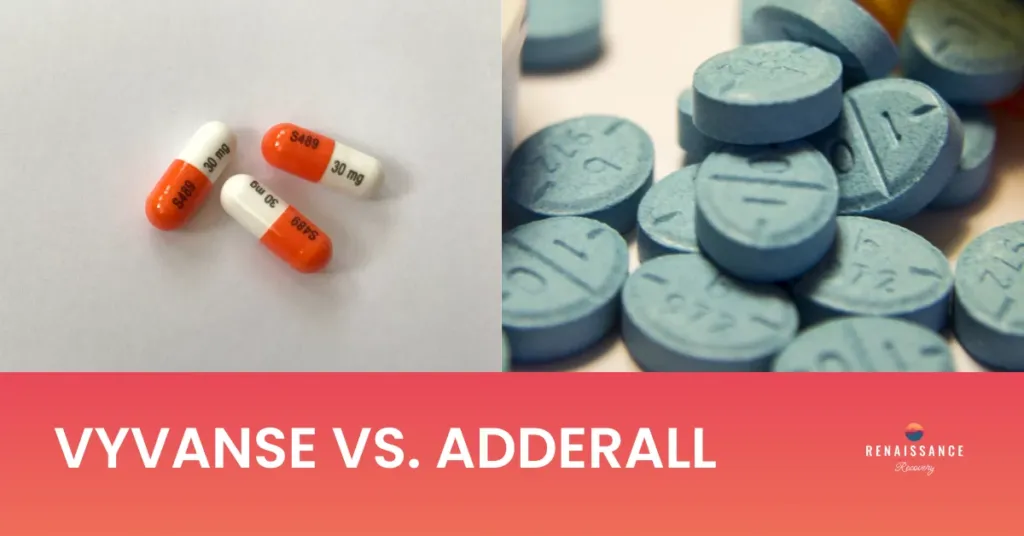
what is better adderall or vyvanse? Neither Adderall nor Vyvanse is universally better — research shows both produce clinically equivalent ADHD symptom control, but they differ meaningfully in duration, smoothness, crash severity, tolerability, and abuse potential. Vyvanse is generally better for people who need consistent all-day coverage, experience distressing crashes on Adderall, or are sensitive to anxiety-amplifying stimulant peaks. Adderall is generally better for people who need faster onset, a shorter active window, the flexibility of an immediate-release option, or a lower out-of-pocket cost.
Introduction
“What is better — Adderall or Vyvanse?” is one of the most searched questions about ADHD medication — and one of the most poorly answered. Most responses default to “it depends on the individual” and stop there, which tells you nothing useful.
This guide gives you the substantive answer: the specific clinical situations where each medication has a genuine edge over the other, what the research actually shows about comparative efficacy, and the concrete factors that most reliably predict which one will work better for your particular profile. The goal is to give you the information needed to have a productive conversation with your prescriber — not to make a self-treatment decision.
What the Research Actually Shows
Clinical trial evidence on comparative efficacy is clear on one main point: both medications work. In well-designed randomised controlled trials, both Vyvanse and Adderall produce significant, clinically meaningful reduction in ADHD core symptoms — inattention, hyperactivity, and impulsivity — compared to placebo.
A meta-analysis of 20 comparative studies in adults found that ADHD symptoms improved significantly with both lisdexamfetamine (Vyvanse) and mixed amphetamine salts (Adderall), with Vyvanse showing somewhat stronger effect sizes in that adult population. However, effect size differences in head-to-head comparisons are small and may not translate meaningfully to individual clinical experience. The Lancet Psychiatry network meta-analysis — the most comprehensive comparison of all ADHD medications — did not rank Vyvanse and Adderall significantly differently in overall effectiveness.
The honest clinical summary: At the population level, Vyvanse has a marginal edge in adult efficacy; at the individual level, response predicts outcome far more reliably than population averages, and many patients respond substantially better to one than the other for reasons that can be identified and predicted.
Scenario-Based Guide: When Each Is Likely Better
Rather than a generic comparison, this section identifies the specific clinical and lifestyle contexts where one medication has a genuine, documented advantage.
Vyvanse Is Likely Better When:
You experience significant crashes on Adderall IR or XR.Vyvanse’s prodrug conversion mechanism produces a gradual, rate-limited release of dextroamphetamine that tapers smoothly over 10–14 hours. There is no sharp concentration drop — and therefore no pronounced crash. This is the most consistently reported advantage of Vyvanse among patients who have used both. If your afternoons or evenings on Adderall are characterised by fatigue, irritability, brain fog, or emotional dysregulation, Vyvanse’s softer offset is a clinically significant advantage.
You have co-occurring anxiety or are anxiety-sensitive.Adderall’s faster, higher dopamine peak — from both its immediate activity and its release mechanism — produces a more abrupt stimulant effect that more readily amplifies anxiety. Vyvanse’s gradual onset avoids the sharp norepinephrine spike that activates the fight-or-flight system most acutely. For women with ADHD in particular, who have higher rates of co-occurring anxiety and tend to be more sensitive to stimulant-related emotional side effects, Vyvanse is frequently better tolerated.
You need consistent all-day coverage for a demanding schedule.Vyvanse’s 10–14 hour duration provides therapeutically effective coverage from morning through evening without requiring a second dose. Adderall XR covers approximately 10–12 hours, and Adderall IR requires re-dosing every 4–6 hours. If you work long or irregular hours, study intensively into the evening, or need medication to be effective for professional and personal responsibilities across a full day, Vyvanse’s extended, consistent coverage is the practical advantage.
You or your prescriber have concerns about misuse potential.Because Vyvanse is a prodrug that cannot be activated faster by changing how it is administered, it provides a genuine pharmacological barrier to the most common routes of stimulant misuse. For patients with a personal or family history of substance use disorder, Vyvanse’s structural lower-misuse profile is a clinically relevant consideration.
You also experience moderate-to-severe binge eating disorder.Vyvanse is the only amphetamine-class medication FDA-approved for binge eating disorder alongside ADHD. If both conditions are present, Vyvanse may address both within a single medication.
You want unaffected absorption regardless of food.Adderall’s absorption can be reduced by vitamin C and acidic foods, creating erratic day-to-day effects depending on dietary choices. Vyvanse’s enzymatic conversion mechanism is not affected by dietary acid content — its activation occurs via red blood cell enzymes rather than gastric absorption. For patients who drink coffee or citrus juice in the morning or have variable diets, Vyvanse produces more predictable day-to-day consistency.
Adderall Is Likely Better When:
You need faster symptom onset.Adderall IR begins working in 20–30 minutes; Adderall XR in 30–60 minutes. Vyvanse typically takes 60–90 minutes to reach therapeutic effect due to the prodrug conversion step. If you need medication to work quickly — for morning meetings, time-sensitive tasks, or on-demand coverage — Adderall IR’s faster onset is a meaningful clinical advantage.
You want a shorter active window.Vyvanse’s 10–14 hours of coverage can be a drawback for people who want medication to clear before the evening so they can wind down naturally, sleep earlier, or simply prefer medication-free time. Adderall IR’s 4–6 hour window provides the greatest control over the duration of coverage — you can take it for specific high-demand periods and remain unmedicated for others.
Cost is a significant consideration.Adderall has generic formulations widely available — generic amphetamine salts are substantially less expensive than brand Adderall, and significantly less expensive than Vyvanse, which has no generic equivalent. In markets without pharmaceutical insurance coverage, this cost difference is clinically meaningful and can determine long-term medication adherence.
You do well on Adderall and don’t experience significant crashes.For patients who tolerate Adderall XR well, experience manageable crash symptoms, and find its symptom control effective, there is no clinical rationale to switch to Vyvanse. “Better tolerated” is a population-level generalisation — individual patients exist at every point on the tolerance spectrum, and some genuinely find Adderall smoother in their specific neurochemistry.
You need narcolepsy treatment.Adderall is FDA-approved for narcolepsy; Vyvanse is not. If ADHD co-occurs with narcolepsy, Adderall is the clinically appropriate medication.
You are trialling stimulants for the first time and want adjustable coverage.Having an IR option available — particularly in early treatment when dose titration is ongoing — gives prescribers the flexibility to give a short-acting trial dose that clears within hours. This makes unwanted side effects shorter-lived and manageable during the calibration phase.
Side Effect Comparison: Where Each Has the Edge
The overall tolerability picture is summarised clearly in the clinical literature: Vyvanse’s side effect profile is generally milder due to the prodrug’s gradual release, but individual patients exist at every point on the spectrum. “Generally milder” is not a guarantee — some patients report Adderall as smoother for their specific neurochemistry.
Adderall XR vs. Vyvanse: The More Relevant Comparison
Most patients comparing these medications are not choosing between Adderall IR and Vyvanse — they are choosing between Adderall XR and Vyvanse, as both are once-daily extended-release medications. This comparison is narrower and more nuanced.
The key difference between Adderall XR and Vyvanse that patients consistently report:
Adderall XR uses a dual-bead release system — approximately half the dose releases immediately, and the other half releases 4 hours later. This creates two distinct plasma concentration peaks that some patients can feel as two separate “waves” of medication. For some patients, this dual-peak structure provides helpful reinforcement mid-day; for others, the second peak feels jarring or produces a second period of stimulant side effects.
Vyvanse produces one smooth, gradual peak — a continuous rise to a sustained plateau followed by a gradual taper. Patients who found Adderall XR’s dual-peak structure disruptive frequently report significantly better consistency on Vyvanse. Patients who valued the mid-day reinforcement of Adderall XR’s second peak sometimes find Vyvanse’s coverage less satisfying in the afternoon.
The Factors That Best Predict Which Will Work Better for You
Based on clinical evidence and consistent patient-reported outcomes, these factors most reliably predict individual response preference:
Vyvanse is more likely to be better if you:
- Experience pronounced crashes or emotional dysregulation as Adderall wears off
- Have a history of anxiety or panic, or find stimulant peaks trigger anxious episodes
- Have an inconsistent diet with frequent acidic food or vitamin C intake
- Need coverage extending well into the evening
- Have a history of substance use disorder or are in a high-monitoring clinical environment
- Are an adult woman, particularly with co-occurring anxiety or hormonal sensitivities
Adderall is more likely to be better if you:
- Have limited cost flexibility and generics are accessible to you
- Want faster morning onset or take-as-needed flexibility via IR
- Find long-duration medications interfere with sleep or evening function
- Tolerate Adderall currently without significant side effects
- Need narcolepsy treatment alongside ADHD
- Are in early titration and benefit from short-acting trials
What Psychiatrists Consider When Choosing
Psychiatrists and prescribers weigh several factors when choosing between these medications for a given patient:
- Previous medication response — if the patient has trialled one and tolerated it poorly, the other is a logical next step
- Co-occurring conditions — anxiety disorder, substance use history, BED, narcolepsy, hormonal factors
- Daily schedule — whether the patient needs long, consistent coverage or flexible short-window dosing
- Cost and insurance — particularly relevant in the absence of PBS/insurance coverage
- Misuse risk assessment — Vyvanse’s lower misuse profile is a clinical factor for at-risk patients
- Metabolic variability — fast metabolisers may clear Adderall IR faster and benefit from Vyvanse’s more reliable duration; slow metabolisers may find Vyvanse’s long tail problematic for sleep
- Hormonal context — women’s varying stimulant sensitivity across the menstrual cycle and in perimenopause is an increasingly recognised prescribing consideration
Safety and Legal Context for Australians
Adderall is not available in Australia — not TGA-approved, not PBS-listed, and not legally prescribable. Vyvanse is TGA-approved and PBS-listed in Australia for ADHD in children aged 6 and over and in adults. For Australian patients, the question “what is better — Adderall or Vyvanse?” is clinically answered as: Vyvanse is the available amphetamine-class option, and for most patients it is an excellent one whose tolerability profile is well-suited to the once-daily clinical model Australian specialist prescribing uses.
For Australian patients who have trialled Vyvanse without adequate response, dexamphetamine — pure dextroamphetamine in IR form — is the prescribable alternative that most closely approximates the Adderall IR profile, and can be considered as part of an ongoing treatment conversation with a prescribing specialist. All require specialist prescription.
Common Misconceptions
Myth 1: “Vyvanse is just long-acting Adderall — they’re basically the same.”Vyvanse is a prodrug requiring enzymatic conversion — it is pharmacologically inactive until metabolised, which changes its onset, duration, peak profile, abuse potential, and dietary interaction characteristics in ways that matter clinically. It is not simply “slow-release Adderall” in the way a bead-release formulation is — the pharmacological mechanism of action is genuinely different.
Myth 2: “Vyvanse is universally better tolerated than Adderall.”Vyvanse is generally better tolerated at a population level — but this does not hold for every individual. Some patients report Adderall as smoother, less anxiety-producing, or more reliably effective for their specific neurochemistry. Clinical generalisations reflect averages, and individual variation is substantial.
Myth 3: “The one with the longer duration is always better.”Duration is a clinical variable, not a virtue in itself. For a patient who needs medication coverage for a defined 6-hour work window and values a medication-free evening, Adderall IR’s shorter duration is clinically preferable. Longer duration is better only when longer and consistent coverage is actually what the patient needs.
Myth 4: “If one doesn’t work, neither will the other.”The fact that both belong to the amphetamine class does not mean they produce identical responses in individual patients. Patients who find one inadequate or poorly tolerated frequently respond well to the other, and trialling the alternative before switching to a different drug class is always clinically appropriate.
FAQ — What Is Better, Adderall or Vyvanse?
Which is better overall — Adderall or Vyvanse?Neither is universally better. Both produce clinically equivalent ADHD symptom control in most patients. Vyvanse has a slight adult efficacy edge in some meta-analyses and generally better tolerability due to its smoother profile. Adderall offers faster onset, flexible IR formulation, shorter active windows, and lower cost via generics. The better medication for a specific person depends on their crash sensitivity, anxiety profile, schedule, cost tolerance, and metabolic profile.
Is Vyvanse stronger than Adderall?A meta-analysis of 20 studies found Vyvanse produced somewhat stronger ADHD symptom improvement than Adderall in adults. However, Vyvanse delivers only dextroamphetamine (the more potent isomer), while Adderall contains both dextro and levo isomers — making Vyvanse’s active component theoretically purer but its delivery rate-limited and gradual. At the felt level, Adderall IR often feels subjectively stronger because of its faster, sharper onset — not because it is pharmacologically more effective.
Which has fewer side effects — Adderall or Vyvanse?Vyvanse generally produces fewer and milder side effects at the population level — particularly regarding crash severity, anxiety amplification, and day-to-day variability. Its gradual release avoids the sharp concentration peaks that drive Adderall’s most acute side effects. However, individual responses vary, and some patients report the opposite experience.
Which is better for anxiety — Adderall or Vyvanse?Vyvanse is generally more appropriate for patients with co-occurring anxiety. Its gradual onset produces a less abrupt norepinephrine spike than Adderall IR’s faster peak — reducing the fight-or-flight activation that amplifies anxiety in sensitive individuals. Psychiatrists managing ADHD with co-occurring anxiety frequently favour Vyvanse for this reason, particularly in adult women.
Which is better for adults — Adderall or Vyvanse?For adults specifically, the Lancet Psychiatry meta-analysis gave a marginal efficacy edge to amphetamine-class medications including Vyvanse, and psychiatrists increasingly favour Vyvanse in adults for its smoother tolerability profile and all-day coverage without re-dosing. However, Adderall XR is also highly effective and widely preferred by adults who find the coverage duration sufficient and tolerate the onset/offset profile well.
Can Vyvanse and Adderall be taken together?No — they should not be combined. Both are stimulants that work through the same mechanisms, and combining them raises risk of serious side effects including dangerously elevated blood pressure and cardiovascular events. If one medication’s coverage is insufficient, the appropriate clinical response is dose adjustment or medication switch — not combination — under prescriber guidance.
Is Vyvanse available in Australia? Can I get Adderall?Vyvanse is TGA-approved and PBS-listed in Australia for ADHD treatment. Adderall is not TGA-approved in Australia and cannot be legally prescribed. For Australian patients, Vyvanse and dexamphetamine are the available amphetamine-based options, both requiring specialist prescription. Attempting to import Adderall is a serious criminal offence regardless of overseas prescription status.
The Bottom Line
Vyvanse has a genuine clinical edge in three specific situations: when crash severity is a significant problem, when co-occurring anxiety makes stimulant peaks difficult to tolerate, and when consistent all-day coverage is the priority. Adderall has a genuine clinical edge when faster onset is needed, when a shorter active window is preferred, when cost is a limiting factor, or when the patient tolerates it well and simply doesn’t need to switch. The research shows both are highly effective for ADHD, with Vyvanse holding a marginal adult efficacy advantage and a broader tolerability advantage. The most clinically useful framing is not “which is better” but “which is better for my specific profile” — and the answer to that question is best determined in a conversation with a prescriber who knows your history, your daily schedule, your anxiety profile, and your treatment goals. For Australians, Vyvanse is the available amphetamine-class choice, and its tolerability profile makes it well-suited to the once-daily clinical approach used in Australian ADHD treatment.
What is better Adderall or Vyvanse Hobart
What is better Adderall or Vyvanse Devonport
What is better Adderall or Vyvanse Launceston
What is better Adderall or Vyvanse Tasmania
What is better Adderall or Vyvanse Victoria
What is better Adderall or Vyvanse Queensland
What is better Adderall or Vyvanse Canberra
What is better Adderall or Vyvanse Australian Capital Territory
What is better Adderall or Vyvanse South Australia
What is better Adderall or Vyvanse New South Wales
What is better Adderall or Vyvanse Darwin
What is better Adderall or Vyvanse Ghan
What is better Adderall or Vyvanse Northern Territory
What is better Adderall or Vyvanse Australia
What is better Adderall or Vyvanse Austria
What is better Adderall or Vyvanse Germany
What is better Adderall or Vyvanse United Kingdom
What is better Adderall or Vyvanse Sweden
What is better Adderall or Vyvanse Denmark
What is better Adderall or Vyvanse Norway
What is better Adderall or Vyvanse Finland
What is better Adderall or Vyvanse Iceland
What is better Adderall or Vyvanse Netherlands
What is better Adderall or Vyvanse Spain
What is better Adderall or Vyvanse Ireland
What is better Adderall or Vyvanse Switzerland
