
Yes — Adderall-related erectile dysfunction goes away for most men. It is typically temporary, dose-dependent, and reversible through dose adjustment, timing changes, or discontinuation. Many men notice improvement within one to two weeks as the body adapts; full resolution after stopping Adderall generally takes two to four weeks. Permanent ED from therapeutic Adderall use is not supported by current clinical evidence.
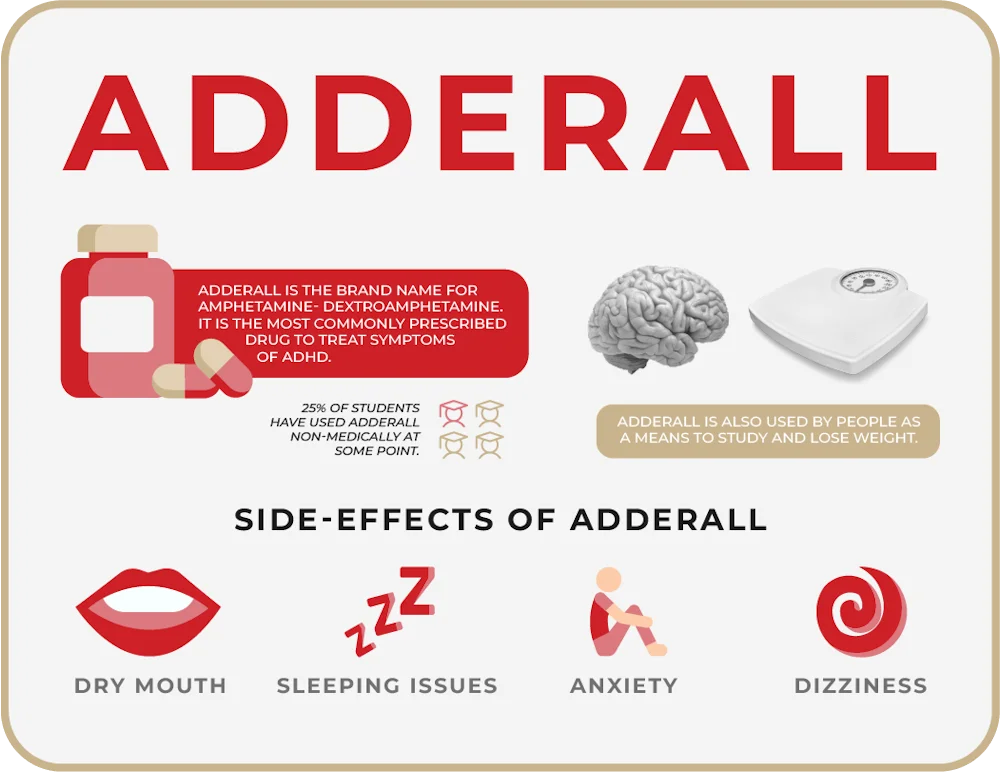
Introduction
Discovering that Adderall is causing erectile dysfunction is one of the more distressing medication side effects a man can face — particularly when the drug is also significantly improving quality of life for ADHD. The immediate question is almost always the same: is this permanent, or will it go away?
The honest answer is reassuring: for the overwhelming majority of men taking Adderall at therapeutic doses, ED is temporary, mechanistically well-understood, and directly fixable through several clinical approaches — none of which require giving up ADHD treatment entirely. This guide covers the recovery timeline, the mechanisms behind the dysfunction, and every viable solution in order of how disruptive they are to your current treatment.
What You Need to Know First
Adderall-related ED stems from two primary mechanisms that are both pharmacologically active and therefore reversible when the drug is removed or adjusted:
- Vasoconstriction — Adderall stimulates alpha-adrenergic receptors, causing smooth muscle in blood vessel walls to contract throughout the body, including in the vessels supplying the penis. Erection requires increased blood flow; reduced blood flow directly impairs erectile function.
- Dopamine and testosterone disruption — Chronic stimulant use can lower testosterone production and alter the dopamine signalling involved in sexual arousal and the physical response cascade.
Key facts at a glance:
- Adderall-related ED is generally uncommon — not all men who take Adderall experience it
- When it does occur, it is typically linked to the drug’s active window and improves as it wears off
- Most men see improvement within 1–2 weeks of the body adapting to medication
- After stopping Adderall, sexual function typically returns within 2–4 weeks
- Current evidence does not support permanent ED from standard prescribed Adderall use
- Dose reduction resolves symptoms in many men without requiring discontinuation
Does Adderall ED Go Away on Its Own?
Yes — for many men, it does resolve on its own, without any intervention. As the body adapts to the presence of Adderall in the first one to two weeks of treatment, cardiovascular and vascular responses begin to normalise. The initial vasoconstriction response tends to be most pronounced in the first days of treatment and frequently moderates as the sympathetic nervous system adjusts to the new baseline of stimulant activity.
Side effects from Adderall, including sexual dysfunction, typically go away after taking the medication for a week or two as the body acclimates. This means if you’ve just started Adderall and notice ED in the first few days, the most clinically appropriate first step is to allow time for adaptation before escalating to dose changes.
However, ED that persists beyond two weeks — or that is significant enough to be affecting relationships and confidence — is a clear signal to act rather than wait. Waiting indefinitely for spontaneous resolution when there are multiple effective interventions available is not the right approach.
The Recovery Timeline: What to Realistically Expect
Understanding the timeline removes much of the anxiety around this side effect. Here is an evidence-based sequence of what typically happens:
Days 1–7 (initial adjustment):ED is most likely to be present and most pronounced in this window, as vasoconstriction is at its strongest relative to the new medication and the body has not yet adapted. This is also when other stimulant side effects — reduced appetite, insomnia, elevated heart rate — are most prominent. The critical question is whether ED is occurring only during the active medication window or also persisting after the drug has worn off.
Weeks 1–2 (adaptation phase):Many men notice gradual improvement as cardiovascular adaptation begins. For some, this is full resolution. For others, it is partial improvement. If function returns to normal as Adderall wears off in the evening, this is a strong indicator that the mechanism is pharmacologically active — and therefore directly manageable through timing adjustment.
Weeks 2–4 (post-adjustment or post-discontinuation):Men who make dose or timing adjustments — or who stop Adderall — typically experience full functional recovery within this window. Full resolution can take up to four weeks in some individuals due to slower normalisation of testosterone levels and vascular tone.
Beyond 4 weeks without improvement:If ED persists beyond four weeks despite dose adjustments, this warrants a prescriber appointment and consideration of whether contributing factors beyond Adderall — underlying cardiovascular health, psychological performance anxiety, or comorbid testosterone issues — are involved.
What Actually Fixes Adderall-Related ED
These solutions are ordered from least disruptive (no medication change required) to most significant (switching ADHD treatment entirely):
1. Timing Adjustment — Try This First
The simplest and most immediately effective intervention for most men is adjusting whenAdderall is taken during the day. Because the vasoconstriction is pharmacologically active and time-limited — Adderall IR clears in 4–6 hours, XR in 8–12 — taking the dose earlier in the morning ensures the vasoconstrictive effect has substantially resolved by evening, when most men are sexually active.
Taking Adderall at 7 AM rather than 9 AM, for example, means IR has cleared by early afternoon and XR by early evening — well before intimate time with a partner. Customers and patients who make this single change frequently report a dramatic and immediate improvement without any dose change or medication switch.
2. Dose Reduction — Highly Effective and Often Sufficient
Because Adderall-related ED is dose-dependent, a modest reduction in daily dose frequently resolves or significantly improves the dysfunction without sacrificing adequate ADHD symptom control. This is the most commonly recommended clinical intervention when timing adjustment alone is insufficient.
The conversation with your prescriber should be specific: report when the dysfunction occurs (during active medication, consistently, or only sometimes), how severe it is, and how long it has been present. This gives the prescriber the information needed to calibrate the adjustment precisely.
3. Switching from XR to IR (or Vice Versa)
For some men, the prolonged coverage of XR is itself the problem — its longer active window means vasoconstriction extends further into the evening. Switching to IR, taken earlier in the day, can restore evening sexual function while maintaining therapeutic ADHD coverage during work hours. Conversely, some men on IR find that taking multiple doses creates repeated vasoconstriction cycles — switching to a single early-morning XR dose can smooth this out and produce less total vasoconstriction in the evening.
4. ED Medications — Safe to Use Alongside Adderall
Phosphodiesterase-5 inhibitors — sildenafil (Viagra), tadalafil (Cialis), vardenafil (Levitra), avanafil (Stendra) — work by promoting vasodilation, directly counteracting Adderall’s vasoconstrictive effect on penile blood vessels. In men who cannot reduce their Adderall dose without losing ADHD symptom control, PDE5 inhibitors are a clinically appropriate and commonly used bridge solution.
These medications are not contraindicated with Adderall at standard doses, though the combination should be reviewed by a prescriber as both drugs affect the cardiovascular system. Do not combine Adderall and PDE5 inhibitors with nitrates (including recreational amyl nitrite) — this combination can cause dangerous blood pressure drops.
5. Address Performance Anxiety
Once ED has occurred a few times, performance anxiety can sustain it independently of the pharmacological cause. The worry about whether an erection will happen is itself sufficient to prevent it in many men — and this psychological layer can persist even after the dose or timing issue has been fixed. If ED continues despite addressing the medication variables, performance anxiety is the most likely remaining contributor, and it responds well to cognitive-behavioural therapy (CBT) or sex therapy.
6. Switch to a Non-Stimulant ADHD Medication
For men for whom neither dose adjustment, timing, nor PDE5 inhibitors resolve the issue adequately, switching ADHD medication is the next step. Non-stimulant options — atomoxetine (Strattera), guanfacine (Intuniv/Tenex), and viloxazine — do not produce vasoconstriction and have substantially different sexual side effect profiles. These may be less effective for some ADHD presentations than stimulants, but for men whose sexual health is significantly impaired, the trade-off may be worthwhile and worth trialling under prescriber guidance.
Is Adderall ED Ever Permanent?
Current clinical evidence does not support permanent ED from standard therapeutic Adderall use. The mechanisms that cause it — vasoconstriction and dopamine/testosterone disruption — are pharmacologically active effects that normalise when the drug is removed or reduced.
The nuance is this: long-term high-dose misuse of amphetamines — doses far above therapeutic range, taken without medical oversight — is a different clinical category. Chronic misuse of stimulants can contribute to progressive cardiovascular damage, including arterial changes that impair blood flow — and this chronic vascular damage can contribute to ED that may not fully reverse. At therapeutic doses under medical supervision, this risk is not clinically established.
There is also an indirect permanence risk worth naming: if Adderall-related ED is not addressed and generates severe performance anxiety, that psychological layer can persist independently even after the pharmacological cause is resolved. This is why addressing it promptly — rather than enduring it in silence — matters.
One rare but serious Adderall-related erection complication deserves specific mention: priapism — a painful erection lasting more than four hours — has been reported in rare cases. This is a medical emergency requiring immediate hospital treatment, as sustained priapism can cause permanent erectile damage through ischaemia if not treated promptly.
The Vasoconstriction + Stimulant Stacking Warning
One specific and avoidable risk that significantly worsens Adderall-related ED: combining Adderall with other vasoconstrictive substances. Extra caffeine, pre-workout supplements, energy drinks, and nicotine all activate the same alpha-adrenergic constriction pathway Adderall uses. Stacking these on top of Adderall significantly amplifies penile vasoconstriction without any additional focus benefit.
From a practical standpoint: if you are experiencing Adderall ED and also consuming high levels of caffeine, using nicotine products, or taking stimulant-containing pre-workouts on the same day, eliminating those additions is the first and simplest intervention — before changing your prescription.
Safety and Legal Context for Australians
Adderall is not available in Australia — it is not TGA-approved and cannot be legally prescribed or dispensed. All of the ED mechanisms, recovery timelines, and treatment approaches described in this article apply equally to Vyvanse (lisdexamfetamine) and dexamphetamine — the TGA-approved amphetamine-based ADHD medications available in Australia — as both produce the same vasoconstrictive and dopaminergic effects through the same downstream mechanism.
Australian men experiencing ED on either of these medications should raise it with their prescribing specialist or GP, who can adjust dose, timing, or refer to a urologist if needed. Do not stop stimulant ADHD medication abruptly without prescriber guidance. Importing Adderall from overseas carries serious legal consequences regardless of prescription status.
Common Misconceptions About Adderall ED
Myth 1: “If Adderall is causing ED, I have to choose between sexual function and treating my ADHD.”This is almost never the case. The majority of Adderall-related ED is resolved through dose adjustment, timing changes, or PDE5 inhibitors — none of which require stopping ADHD treatment. The “either-or” framing is the wrong starting point. The right starting point is a prescriber conversation about optimising both.
Myth 2: “Adderall ED means I have a permanent problem with my vascular system.”No — at therapeutic doses, the mechanism is pharmacologically active and reversible. The vascular change is caused by the drug’s activity, not structural damage to your arteries. Remove or reduce the drug, and blood flow normalises.
Myth 3: “ED only happens to men who are already having problems in that area.”Adderall-related ED occurs in men with no pre-existing erectile issues, in their 20s and 30s, at standard therapeutic doses. It is a pharmacological side effect of vasoconstriction — it does not require pre-existing vascular disease to manifest. Being otherwise healthy does not provide immunity.
Myth 4: “Taking Viagra with Adderall is dangerous.”At standard doses, PDE5 inhibitors are not contraindicated with Adderall and are a clinically established treatment option for this specific side effect. The combination affects blood pressure and should be reviewed by a prescriber, but is not categorically unsafe. The dangerous combination is PDE5 inhibitors + nitrates — not PDE5 inhibitors + Adderall.
FAQ — Does Adderall ED Go Away?
Does Adderall ED go away on its own without changing the dose?For many men, yes — particularly in the first one to two weeks of treatment as the body adapts to the medication. If ED is present only during the active medication window and resolves as the drug wears off, it often improves progressively as cardiovascular adaptation occurs. If it persists beyond two weeks or is significantly affecting quality of life, don’t wait for spontaneous resolution — bring it to your prescriber.
How long does Adderall ED last after stopping the medication?Most men experience return of normal erectile function within two to four weeks of stopping Adderall as the vasoconstriction resolves and testosterone levels normalise. Some men notice improvement within days; others take the full four weeks. Do not stop Adderall abruptly without prescriber guidance — tapering is preferred to avoid a withdrawal-like period of fatigue and mood disruption.
Does taking Adderall earlier in the day fix ED?For many men, yes — this is the most practical and immediate fix. Taking Adderall IR at 7 AM rather than 9 AM means the drug has largely cleared by early afternoon. XR taken at 7 AM is substantially cleared by early evening. Scheduling intimate time after the medication’s active window has passed removes the vasoconstrictive mechanism driving the ED. This single timing change resolves the issue for a meaningful proportion of men without requiring any dose or medication change.
Can I take Viagra or Cialis while on Adderall?Yes — PDE5 inhibitors are a recognised and clinically appropriate treatment for Adderall-related ED and are regularly used in this context. They work by promoting vasodilation in the penile vessels, directly counteracting Adderall’s vasoconstrictive effect. Discuss with your prescriber or GP, as both drugs affect the cardiovascular system and the combination should be reviewed — but it is not categorically contraindicated at standard doses.
Is Adderall ED worse with XR than IR?For some men, yes — because XR’s longer active window means vasoconstriction extends further into the evening. If ED is primarily occurring in the evening, XR’s 8–12 hour coverage is more likely to be the direct cause than IR’s 4–6 hour window. Switching from XR to an earlier, morning-only IR dose resolves this for some men.
What if dose adjustment and timing changes don’t fix the ED?If adjusting dose and timing does not resolve the issue within four weeks, the next steps are: adding a PDE5 inhibitor, addressing any performance anxiety component with a therapist experienced in sexual health, assessing for other contributing causes (testosterone levels, underlying cardiovascular health), and discussing switching to a non-stimulant ADHD medication with your prescriber. Persistent ED despite medication optimisation warrants a urology referral.
Can Adderall cause any permanent sexual damage?At standard therapeutic doses under medical supervision, current evidence does not support permanent ED or lasting sexual dysfunction. The mechanisms are pharmacologically active and reversible. Long-term high-dose misuse carries different — and more serious — cardiovascular risks that can indirectly affect long-term erectile function, but this is a different clinical category from prescribed therapeutic use. The rare risk worth knowing: priapism (erection lasting more than four hours) requires immediate emergency treatment to prevent permanent damage from ischaemia.
The Bottom Line
Adderall ED goes away for the vast majority of men — it is temporary, mechanistically well-understood, and directly addressable through timing adjustment, dose reduction, PDE5 inhibitors, or medication alternatives. The recovery timeline is typically one to four weeks, depending on whether you’re waiting for natural adaptation, adjusting the prescription, or stopping the medication. What it is not is a reason to silently stop ADHD treatment, accept a permanently reduced quality of intimate life, or assume the worst. Raising it with a prescriber promptly is both the right clinical move and the fastest path to resolution. For Australians on Vyvanse or dexamphetamine with the same experience, the same solutions apply through the same specialist relationship.
Does Adderall ED go away Hobart
Does Adderall ED go away Devonport
Does Adderall ED go away Launceston
Does Adderall ED go away Tasmania
Does Adderall ED go away Victoria
Does Adderall ED go away Queensland
Does Adderall ED go away Canberra
Does Adderall ED go away Australian Capital Territory
Does Adderall ED go away South Australia
Does Adderall ED go away New South Wales
Does Adderall ED go away Darwin
Does Adderall ED go away Ghan
Does Adderall ED go away Northern Territory
Does Adderall ED go away Australia
Does Adderall ED go away Austria
Does Adderall ED go away Germany
Does Adderall ED go away United Kingdom
Does Adderall ED go away Sweden
Does Adderall ED go away Denmark
Does Adderall ED go away Norway
Does Adderall ED go away Finland
Does Adderall ED go away Iceland
Does Adderall ED go away Netherlands
Does Adderall ED go away Spain
Does Adderall ED go away Ireland
Does Adderall ED go away Switzerland
