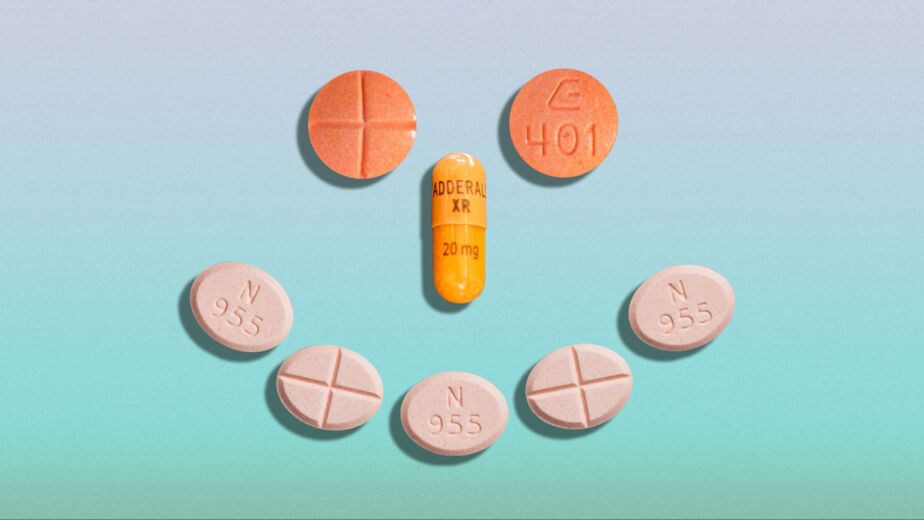
For the majority of men, yes — Adderall-induced erectile dysfunction (ED) does go away, either on its own as the body adjusts to the medication over 1–4 weeks, or with targeted interventions including dose adjustment, timing changes, or, where appropriate, PDE5 inhibitors like sildenafil (Viagra). Adderall ED is fundamentally a dose-dependent, mechanism-driven, and reversible phenomenon in most cases — rooted in Adderall’s vasoconstrictive narrowing of penile blood vessels, which reduces as plasma concentration drops between doses. However, a subset of men — particularly those on high doses, those who misuse rather than use therapeutically, or those with pre-existing vascular risk factors — experience more persistent ED that requires active clinical management. The most important first step is not stopping Adderall abruptly — it is discussing the issue with your prescriber, who has several evidence-based options available.
Introduction
Adderall-induced ED is one of the most commonly searched and least openly discussed side effects of stimulant medication. Men experiencing it typically face a difficult decision: stop a medication they need for their ADHD and productivity, or continue and manage a significant quality-of-life problem.
This article provides the complete evidence-based answer to whether Adderall ED goes away: the typical recovery timelines, the mechanisms that determine whether it resolves spontaneously vs. requiring intervention, the full spectrum of management strategies from simple timing changes to clinical prescriptions, and the clinical red flags indicating when a prescriber referral is non-negotiable. Every claim is grounded in clinical pharmacology, peer-reviewed research, and established ED treatment guidelines.
Why Adderall Causes ED: The Mechanism That Determines Recovery
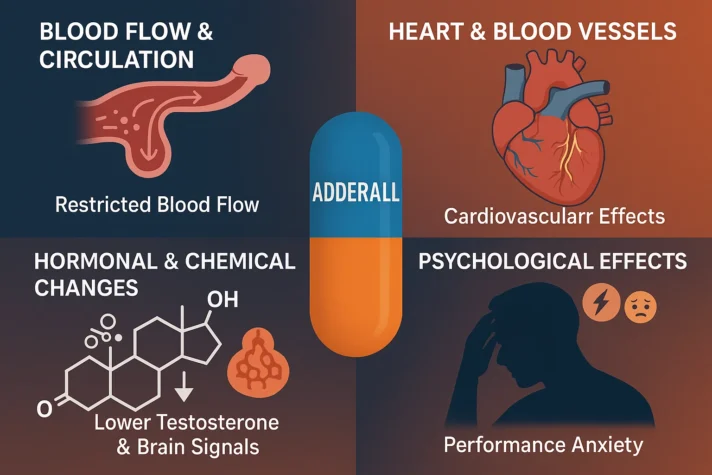
Understanding why Adderall causes ED is essential for understanding whether and how it goes away:
The Primary Mechanism: Vasoconstriction
Adderall’s norepinephrine-releasing effect activates alpha-1 adrenergic receptors in the penile vasculature — causing blood vessels to narrow (vasoconstriction):
- Alpha MD: “Adderall causes the blood vessels to narrow, which can reduce blood flow to the penis, making it difficult to achieve or maintain an erection“
- GetLabTest.com: “The vasoconstricting properties of Adderall can affect sexual function — reduced blood flow to reproductive organs may lead to difficulties with sexual performance. These effects are usually temporary”
- This mechanism is directly dose-dependent and time-dependent: it is most pronounced during peak plasma concentration (1–4 hours after dosing) and diminishes as Adderall clears
The Secondary Mechanism: Neurotransmitter Imbalance
Adderall’s extreme elevation of dopamine and norepinephrine disrupts the neurochemical balance required for erection initiation at the hypothalamic and spinal level:
- Harvard Health analysis: Adderall-induced ED involves “a variety of different effects on user’s sex lives” related to CNS neurotransmitter disruption, not purely peripheral vasoconstriction
- PubMed 2001 pharmacology of erectile function: “Central regulation of the erectile process involves dopamine, serotonin, noradrenaline, and nitric oxide” — Adderall’s imbalanced elevation of dopamine/noradrenaline competes with the natural CNS erectile initiation signals
The Tertiary Mechanism: Psychological Performance Anxiety
Once ED occurs even once, performance anxiety can create a self-perpetuating cycle:
- NowPatient clinical review: “So many different things can cause erectile dysfunction, both physical and mental, and some of them can be serious — you need to see your physician to rule out these conditions and get to the root cause”
- Healthmatch: “Psychological factors such as anxiety can also interfere — if you had ED once, you may worry about it happening again, which creates a self-reinforcing cycle”
Why this matters for recovery: The vasoconstriction mechanism is highly reversible (it stops when Adderall clears). The neurotransmitter imbalance mechanism may take weeks to stabilise as the body adjusts. The psychological mechanism requires separate, deliberate intervention.
Does Adderall ED Go Away? The Recovery Timeline
Scenario 1 — Early-Onset ED (First Few Weeks on Adderall)
This is the most common and most reassuring scenario:
- Verywell Mind: “Side effects usually go away after taking Adderall for a week or two as the body adjusts to the medication”
- Choosing Therapy: “Initial side effects may last for a week or two as your body adjusts to the medication. These effects often disappear on their own”
- Healthmatch: “If you’ve recently started taking Adderall, your body may need time to adjust as it can take several weeks for side effects to subside. In clinical trials, participants achieved the desired result of Adderall after 3–4 weeks“
- GoodRx: “For most people, Adderall-related ED is temporary. The symptoms often fade once their bodies adjust to the medication”
Typical timeline for spontaneous resolution: 1–4 weeks from initiation, at a stable dose, in otherwise healthy men.
Scenario 2 — Persistent ED Despite Body Adjustment (6+ Weeks on Adderall)
If ED persists beyond the 4–6 week adjustment window, spontaneous resolution without intervention becomes less likely:
- Ro.co men’s health: “As distressing as ED can be, this side effect from Adderall isn’t permanent, and you can treat ED symptoms from Adderall in three primary ways”
- NowPatient: “Your body may become more accustomed to Adderall over time. But if not, there are options”
- Persistent ED (beyond 6 weeks on a stable dose) signals that the vasoconstrictive and/or neurotransmitter mechanisms are not self-resolving — requiring one of the active management strategies below
Scenario 3 — ED Following Dose Escalation
If ED began or worsened after a dose increase, it is directly dose-related:
- The vasoconstrictive effect is dose-proportional — higher doses produce greater alpha-adrenergic activation and more pronounced blood vessel narrowing
- In this scenario, dose reduction is both the most logically targeted and clinically fastest intervention for recovery
Scenario 4 — ED After Stopping Adderall
For men who stop Adderall specifically to resolve ED:
- Mattioli Journals clinical note: “It may improve for some [after stopping Adderall], but abrupt stopping increases withdrawal risks that can temporarily affect mood and energy. Medical guidance for tapering is safer“
- The vasoconstrictive component of Adderall ED resolves within hours to days of stopping — as Adderall clears the system
- The neurochemical recovery — normalisation of dopamine/norepinephrine tone — takes longer: days to several weeks for most
- University portal clinical summary: “Timelines range from a few weeks for milder cases to several months when abuse patterns were involved“
- Recovery Centers of America: “Complete neurological recovery may take six months to a year, although most individuals experience significant improvement within the first few months” — in the context of high-dose chronic misuse specifically
Key distinction: For prescribed therapeutic users who stop or reduce dose, recovery is typically measured in days to weeks. For long-term misuse at high doses, recovery can extend to months.
6 Proven Strategies to Make Adderall ED Go Away
Strategy 1 — Timing: Schedule Sex in the Medication-Off Window
The most practical, zero-risk, zero-cost intervention:
- NowPatient: “You may find Adderall is more likely to cause erectile dysfunction when you’ve recently taken it. You may get better results if you take your Adderall as far away as you can from when you plan to have sex, like taking it in the morning if you want to have sex in the evening”
- GoodRx: Timing Adderall dose and sexual activity strategically — “taking it early in the day so that it’s mostly cleared by evening”
- Hims: Sexual activity is recommended in the low-concentration window — 8+ hours after an IR dose or the evening after a morning XR dose
- Adderall IR typically clears significantly within 4–6 hours; Adderall XR plasma levels drop to below-peak within 8–10 hours
- This strategy directly bypasses the vasoconstrictive window — erections during the medication-off period should be unaffected by Adderall
Strategy 2 — Dose Adjustment (Discuss with Your Prescriber)
The most pharmacologically targeted intervention:
- GoodRx: “Dose reduction often resolves Adderall-related ED”
- Healthmatch: If ED is dose-related, “your doctor may try a lower dose”
- Ro.co: Dose adjustment is listed as one of the three primary treatment options for Adderall ED
- A lower effective dose for ADHD that preserves therapeutic benefit while reducing vasoconstrictive intensity may provide the resolution point for many patients
Strategy 3 — Formulation Switch (IR vs. XR)
Switching between formulations can change the plasma concentration curve:
- Adderall XR produces a flatter, more sustained plasma curve — potentially lower peak concentration and therefore less pronounced peak vasoconstriction
- GoodRx: “In some cases, switching to a different formulation or medication altogether may help”
- Ubie Health: “Factors like dosage and individual differences affect sexual function — adjusting the approach may resolve the issue”
- For some men, the opposite applies: switching from XR to IR with strict timing (morning dose, evening sex) can widen the medication-free window more clearly
Strategy 4 — Medication Switch (Discuss Non-Stimulant Options)
For patients with persistent ED despite all other strategies:
- The 2025 PubMed large-scale study found: “Non-stimulant treatments have milder effectson sexual function than stimulants”
- Non-stimulant ADHD medications with far lower sexual side effect profiles include:
- Switching medications should always be done in consultation with your prescriber
Strategy 5 — PDE5 Inhibitors (Viagra, Cialis, Levitra)
When all other strategies are insufficient, PDE5 inhibitors are a well-established clinical option:
- NowPatient: “ED meds like Viagra (sildenafil), tadalafil, and vardenafil are effective treatments for erectile dysfunction for many men. Adderall and erectile dysfunction drugs like Viagra aren’t contraindicated — no adverse interactions have been reported”
- The American Urological Association (AUA) guidelines: “The AUA recommends that PDE5 inhibitors be offered as first-line therapy for ED unless contraindicated. The three PDE5 inhibitors studied — sildenafil (Viagra), tadalafil (Cialis), and vardenafil (Levitra) — are metabolised by the liver”
- Dr. Oracle’s 2025 sildenafil protocol: “Initiate sildenafil at 50 mg taken approximately 1 hour before sexual activity, with dose adjustment to 25–100 mg based on efficacy and tolerability — maximum frequency is once daily”
- NHS sildenafil guidance: “Take sildenafil up to 4 hours before you want to have sex. For sildenafil to work properly, you’ll need to be sexually excited”
- The mechanism of PDE5 inhibitors (preventing breakdown of cyclic GMP, which promotes blood vessel dilation) directly counteracts Adderall’s vasoconstrictive alpha-adrenergic mechanism — making this a pharmacologically rational co-treatment
- Important caveat: Discuss all medications including Adderall with the prescribing clinician before starting a PDE5 inhibitor — while no major interaction is documented, individual cardiovascular assessment matters
Strategy 6 — Lifestyle Factors That Support Erectile Function
Lifestyle factors compound or mitigate Adderall’s vasoconstrictive effect:
- NowPatient: “Smoking, taking recreational drugs, drinking excessive amounts of alcohol, being overweight, not eating a nutritious enough diet, and not getting enough sleep, can all contribute to erectile dysfunction. If you take better care of yourself, it can make it easier to get and keep an erection”
- Exercise: Regular cardiovascular exercise independently improves endothelial function and blood vessel responsiveness — counteracting vasoconstrictive tendency
- Alcohol: Avoid heavy alcohol use — it compounds vasoconstriction and adds its own ED risk
- Sleep: Adderall-related sleep disruption reduces morning testosterone levels, independently worsening ED — addressing sleep hygiene matters
- Zinc and magnesium supplementation: Both support testosterone synthesis and sexual function — and both are depleted by Adderall’s appetite suppression
When Adderall ED Does NOT Go Away Easily: Risk Factors
A subset of men experience more persistent ED that does not resolve through simple timing or dose adjustments:
Elevated risk for persistent Adderall ED:
- High dose: Vasoconstrictive effect scales with dose — men on 40 mg+ daily face a steeper recovery curve
- Non-prescribed/misuse patterns: “Timelines range from a few weeks for milder cases to several months when abuse patterns were involved“
- Pre-existing vascular disease: Hypertension, atherosclerosis, or diabetes compromise erectile blood flow independent of Adderall — the drug compounds rather than solely causes the ED
- Pre-existing psychological ED: Anxiety disorders, depression, or relationship difficulties create a substrate on which Adderall’s physical mechanism amplifies
- Long-term high-dose chronic use: Recovery Centers of America: “Complete neurological recovery may take six months to a year” in the context of chronic high-dose stimulant misuse
- Performance anxiety entrenchment: Once the psychological loop of fear-of-failure is established, it perpetuates ED independently of Adderall’s physical mechanism
When to See a Doctor About Adderall-Related ED
See your prescriber if:
- ED persists beyond 4–6 weeks on a stable Adderall dose without improvement
- ED began immediately upon dose escalation
- ED is accompanied by other cardiovascular symptoms (chest pain, palpitations, shortness of breath)
- You are considering stopping Adderall abruptly — taper guidance is needed
- You want to explore PDE5 inhibitors — a clinical assessment is needed before prescribing
- ED is causing significant relationship or psychological distress
See a urologist or ED specialist if:
- ED persists after Adderall dose adjustment or discontinuation
- You have diabetes, hypertension, or cardiovascular disease as possible comorbid contributors
- You are under 40 with persistent ED — this warrants vascular and hormonal evaluation regardless of Adderall status
NowPatient’s clinical guidance: “The first step you need to take is to find out if your ED was caused by the Adderall or by something else. So many different things can cause erectile dysfunction, both physical and mental”.
Does Stopping Adderall Always Resolve ED?
For most men, stopping or reducing Adderall does resolve the ED — but stopping abruptly is not the recommended approach:
- The vasoconstrictive component resolves within hours to days of clearance
- The neurochemical recovery timeline: most prescribed users recover erections within days to 2–4 weeks of stopping
- Mattioli clinical note: “It may improve for some — but abrupt stopping increases withdrawal risks that can temporarily affect mood and energy. Medical guidance for tapering is safer and more effective”
- For chronic high-dose misuse: “several months” for full recovery
- Important: in rare cases (mostly associated with other drug classes like SSRIs, documented in PubMed), post-drug sexual dysfunction can persist after stopping — this appears rare with stimulants compared to antidepressants
FAQ — Does Adderall ED Go Away?
Does Adderall erectile dysfunction go away on its own?
For most men, yes — particularly within the first 1–4 weeks of starting Adderall, as the body adjusts. Verywell Mind confirms: “Side effects usually go away after taking Adderall for a week or two”. Beyond 6 weeks without improvement, active intervention is recommended.
How long does Adderall-related erectile dysfunction last?
For early adjustment-phase ED: 1–4 weeks to resolve spontaneously. For persistent ED requiring intervention: resolution depends on the strategy — timing changes can provide same-day relief; dose reduction typically resolves ED within days to weeks; recovery after stopping Adderall entirely is typically days to 2–4 weeks for prescribed users, and up to several months following high-dose misuse.
Can I take Viagra with Adderall?
Yes — no contraindication or adverse interaction has been documented between Adderall and PDE5 inhibitors (sildenafil/Viagra, tadalafil/Cialis, vardenafil/Levitra). NowPatient confirms they are “not contraindicated” — but always discuss with your prescriber before adding any new medication. The AUA recommends PDE5 inhibitors as first-line treatment for ED.
Does lowering Adderall dose help with ED?
Yes — Adderall ED is dose-dependent; a lower dose produces less alpha-adrenergic vasoconstriction. GoodRx confirms dose reduction often resolves Adderall-related ED. This should be discussed with your prescriber to ensure ADHD symptoms remain controlled.
Will ED go away if I stop taking Adderall?
For most men, yes — the vasoconstrictive effect resolves within hours to days of Adderall clearing. Full neurochemical normalisation takes days to weeks for prescribed users; months for high-dose chronic misuse. Abrupt stopping is not recommended — medical tapering is safer.
Does the timing of Adderall dose affect ED?
Yes — significantly. Adderall’s vasoconstrictive effect is most pronounced during peak plasma concentration (1–4 hours post-dose) and diminishes as the drug clears. Scheduling sexual activity 8+ hours after dosing — or in the morning before the dose — is the simplest intervention and often sufficient.
The Bottom Line
Adderall ED goes away for the vast majority of men — either within 1–4 weeks as the body adjusts, or reliably with dose adjustment, timing changes, formulation switches, or PDE5 inhibitors like sildenafil. The core mechanism — norepinephrine-driven vasoconstriction reducing penile blood flow — is directly dose-dependent and time-dependent, making it highly reversible. The simplest intervention — scheduling sexual activity in the medication-off window (8+ hours after dosing) — bypasses the vasoconstrictive window entirely and costs nothing. For persistent ED beyond 6 weeks despite timing adjustments, the clinical toolkit is well-stocked: dose reduction (GoodRx confirms this often resolves ED), formulation switch, medication switch to a non-stimulant (2025 research confirms milder sexual effects), and PDE5 inhibitors (not contraindicated with Adderall, AUA first-line therapy). The key is not to suffer silently or stop Adderall abruptly — but to raise the issue with your prescriber, who has evidence-based solutions at every step.
Does adderall ed go away Hobart
Does adderall ed go away Devonport
Does adderall ed go away Launceston
Does adderall ed go away Tasmania
Does adderall ed go away Victoria
Does adderall ed go away Queensland
Does adderall ed go away Canberra
Does adderall ed go away Australian Capital Territory
Does adderall ed go away South Australia
Does adderall ed go away New South Wales
Does adderall ed go away Darwin
Does adderall ed go away Ghan
Does adderall ed go away Northern Territory
Does adderall ed go away Australia
Does adderall ed go away Austria
Does adderall ed go away Germany
Does adderall ed go away United Kingdom
Does adderall ed go away Sweden
Does adderall ed go away Denmark
Does adderall ed go away Norway
Does adderall ed go away Finland
Does adderall ed go away Iceland
Does adderall ed go away Netherlands
Does adderall ed go away Spain
Does adderall ed go away Ireland
Does adderall ed go away Switzerland