
how does adderall work? Adderall works by entering the brain’s nerve terminals, blocking the reuptake of dopamine and norepinephrine, and triggering their direct release into the synaptic gap — raising concentrations of both neurotransmitters significantly above baseline. In ADHD brains, this corrects a chronic deficit, producing focus and calm. In neurotypical brains, it pushes past normal levels, creating stimulation and euphoria. Effects begin within 30–60 minutes.
Introduction
“How does Adderall work?” sounds like a single question, but it actually has three distinct answers depending on what you’re really asking: the chemistry inside a single neuron, how that chemistry produces real-world effects on attention and behaviour, and why the same drug feels completely different in an ADHD brain versus a neurotypical one.
This article walks through all three — from the molecular level up to daily lived experience. Whether you’re a patient trying to understand your own prescription, a parent researching your child’s medication, or simply someone who wants to move past the vague explanation of “it raises dopamine,” this is the guide that fills in the gaps.
What You Need to Know First
Adderall is a branded combination of four amphetamine salts: dextroamphetamine saccharate, amphetamine aspartate monohydrate, dextroamphetamine sulfate, and amphetamine sulfate. The blend is deliberately designed so the dextro (right-handed) isomer — dextroamphetamine — does the majority of the cognitive work, while the levo (left-handed) isomer contributes more to the peripheral stimulant effects like increased heart rate. Dextroamphetamine is approximately four times more potent at releasing dopamine than the levo isomer, which is why it’s the dominant active component in both Adderall and its Australian-available equivalent, Vyvanse.
At a glance — the mechanism summary:
- Blocks dopamine transporters (DAT) and norepinephrine transporters (NET) — preventing reuptake
- Reverses the direction of DAT and NET, actively pumping dopamine out of neurons into the synapse
- Displaces dopamine from vesicular storage via VMAT-2, increasing free dopamine inside the neuron
- Weakly inhibits monoamine oxidase (MAO), the enzyme that breaks down dopamine — extending its active lifespan
- Net result: dopamine and norepinephrine flood the synaptic gap and remain there significantly longer than normal
The Step-by-Step Chemistry: What Happens Inside a Neuron
Understanding how Adderall works at the cellular level removes all the mystery. Here’s what happens in sequence after you swallow a dose:
1. Adderall enters the bloodstream and crosses into the brain.Amphetamine molecules are lipid-soluble — they cross the blood-brain barrier relatively easily, reaching peak plasma concentration about 3 hours after an oral dose.
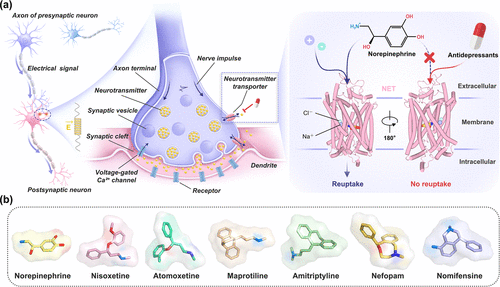
2. Adderall enters presynaptic neurons via dopamine and norepinephrine transporters.Rather than simply sitting on the outside of the cell, amphetamine is actively transported insidethe neuron — using the same doorways that normally carry dopamine back in for recycling.
3. Once inside, Adderall forces dopamine out of storage vesicles.Normally, dopamine is held in protective vesicles inside the neuron, waiting to be released on command. Adderall displaces it through VMAT-2 inhibition, causing dopamine to flood the neuron’s cytoplasm (the internal fluid).
4. The dopamine transporter runs in reverse.With dopamine now concentrated inside the neuron, the transporter reverses direction — pumping dopamine out into the synapse instead of bringing it in. This is active, forced release, not just passive overflow.
5. Adderall blocks reuptake simultaneously.At the same time, it competes with dopamine at the transporter, slowing down the normal recycling of dopamine back into the cell. This dual action — forced release + blocked reuptake — is why Adderall produces such a pronounced effect on synaptic dopamine levels.
6. MAO inhibition extends dopamine’s active time.Monoamine oxidase (MAO) is the enzyme that would normally degrade dopamine once it’s in the synapse. Adderall partially inhibits this enzyme, extending the window during which dopamine can bind to receptors.
What this means in practice: Dopamine and norepinephrine stay elevated in the synapse — particularly in the prefrontal cortex — for the duration of the drug’s activity window. For an ADHD brain, this elevation fills a chronic gap. For a non-ADHD brain, it exceeds normal levels and produces stimulant effects instead.
Why the Prefrontal Cortex Is the Key Target
Not all dopamine pathways are equally relevant to Adderall’s therapeutic effect. The critical region is the prefrontal cortex (PFC) — the brain’s executive command centre, responsible for planning, working memory, impulse control, and sustained attention.
Research confirms that Adderall’s cognition-enhancing effects are specifically tied to its ability to raise catecholamine (dopamine and norepinephrine) levels preferentially in the PFC, activating norepinephrine α2-receptors and dopamine D1 receptors in that region. These receptors, when activated at the right level, strengthen the signal-to-noise ratio in prefrontal circuits — making it easier to maintain attention on a specific task and filter out irrelevant distractions.
Norepinephrine’s role here is often underappreciated. In the PFC, norepinephrine enhances “relevant signal” processing — essentially amplifying the neural pathways associated with the task at hand while quieting background noise. This is why Adderall improves not just focus but also the ability to prioritise and stay on task without being derailed by competing stimuli.
How Adderall IR and XR Deliver the Drug Differently
The mechanism inside the neuron is identical for both formulations. What differs is entirely the delivery system — how the drug reaches the brain and how long it stays there.
The XR bead system is the key innovation: the delayed-release beads are polymer-coated, dissolving only when they reach a more alkaline section of the intestine approximately 4 hours after swallowing. This mimics taking two IR doses spaced 4 hours apart — but with a smoother curve between them, which reduces both the intensity of the initial onset and the sharpness of the eventual comedown.
Practical implication: XR produces more consistent plasma levels throughout the day, which many patients find more functional. IR gives more control — you can time and adjust individual doses — but the twice-or-three-times daily schedule requires more discipline and introduces more variability.
How Adderall Works for Narcolepsy
Narcolepsy is a neurological disorder in which the brain cannot regulate sleep-wake cycles normally, causing people to fall asleep involuntarily during the day. Adderall treats narcolepsy through the same mechanism it uses for ADHD — but the relevant pathway here is wakefulness promotion rather than attention correction.
Dopamine and norepinephrine are both critical regulators of the arousal system. By flooding the brain with both neurotransmitters, Adderall activates wake-promoting circuits in the hypothalamus and brainstem, actively suppressing the brain’s tendency to slip into sleep. Amphetamine-class stimulants increase wakefulness by blocking dopamine reuptake and stimulating its release — both mechanisms working simultaneously to maintain a state of sustained arousal. For narcolepsy patients, this effect is essential for basic daily functioning, not enhancement.
Adderall’s Effects on the Body Beyond the Brain
Adderall’s mechanism doesn’t stop at the prefrontal cortex. Norepinephrine in particular acts on receptors throughout the body — activating the sympathetic nervous system in ways that produce measurable physical effects alongside the cognitive ones:
- Heart rate increases — norepinephrine acts on cardiac receptors, raising beats per minute
- Blood pressure rises — both systolic and diastolic pressure increase during active medication periods
- Appetite suppression — amphetamine stimulates the hypothalamus to suppress hunger signals, often causing users to forget to eat entirely during the drug’s active window
- Pupil dilation — sympathetic nervous system activation causes the pupils to widen
- Elevated body temperature — increased metabolic activity raises core temperature, which becomes a risk during intense physical exertion
- Dry mouth — reduced salivary gland activity is a near-universal side effect
These effects are dose-dependent. At therapeutic doses in otherwise healthy individuals, most are manageable. At higher doses or in people with cardiovascular vulnerabilities, they become clinically significant risks.
How Adderall Works Differently in ADHD vs. Non-ADHD Brains
This is arguably the most important distinction in understanding Adderall’s mechanism — and the one most commonly misunderstood.
In an ADHD brain: Dopamine signalling in the prefrontal cortex is chronically underactive. The brain’s reward and motivation systems don’t generate sufficient dopamine in response to everyday tasks — producing restlessness, distractibility, and the constant need for stimulation. Adderall raises dopamine from an insufficient level to a functional one. The result is experienced as calm focus, reduced internal noise, and the ability to complete tasks that were previously impossible to sustain.
In a non-ADHD brain: Dopamine signalling is already at a functional baseline. Adderall pushes it above that baseline — producing euphoria, heightened arousal, and stimulant effects rather than therapeutic correction. Research confirms that this excess dopamine can actually disturbrather than improve complex cognitive processing at higher concentrations, which is why neurotypical people don’t reliably perform better on Adderall despite feeling like they do.
The 2025 WashU Medicine research adds an important nuance: stimulants primarily work by making tasks feel more rewarding and motivationally engaging — not by directly activating attention circuitry. This reframes the mechanism slightly: Adderall doesn’t force attention, it changes how the brain evaluates whether something is worth attending to. For ADHD brains, that revaluation is transformative. For non-ADHD brains, it’s a stimulant hit with limited cognitive upside.
Common Misconceptions About How Adderall Works
Myth 1: “Adderall directly improves intelligence or cognitive ability.”Adderall increases dopamine and norepinephrine — it doesn’t enhance the underlying neural architecture that determines intelligence. For ADHD patients, removing the barrier of chronic dopamine deficit allows existing cognitive capacity to function properly. That can look dramatic — because the gap between impaired and corrected functioning is large — but it’s not enhancement above baseline; it’s restoration to it.
Myth 2: “Adderall works the same way as caffeine.”Both are stimulants, but their mechanisms are fundamentally different. Caffeine works primarily by blocking adenosine receptors — preventing the buildup of the chemical signal that causes sleepiness. Adderall works on the dopamine and norepinephrine systems directly, forcing neurotransmitter release and blocking reuptake. Caffeine’s effect is blunting fatigue; Adderall’s effect is actively raising motivational and attentional neurotransmitters. Combining them amplifies cardiovascular side effects.
Myth 3: “The calming effect proves the ADHD diagnosis.”Because Adderall raises dopamine in everyone’s brain — not just ADHD brains — a calming effect at a particular dose is not diagnostic. At sub-stimulant doses, even neurotypical people can experience mild calming from dopamine modulation. Self-testing with Adderall to determine whether you have ADHD is medically meaningless and carries real risk.
Myth 4: “Adderall XR is just a stronger version of IR.”XR and IR contain identical active ingredients at equivalent doses. XR is not more potent — it uses a bead-delivery system to extend duration and smooth the plasma curve. The choice between them is about timing, lifestyle, and crash sensitivity — not strength.
Safety, Dependence, and Adderall’s Risk Profile
Adderall carries genuine risk of dependence precisely because of how it works: the dopamine pathway it repeatedly activates is the same pathway involved in reward learning and addictive behaviour. At therapeutic doses under medical supervision, dependence risk is significantly lower than in recreational use — but it is real and should not be dismissed.
Specific risks worth understanding:
- Receptor downregulation: Chronic overstimulation causes the brain to reduce dopamine receptor density over time — lowering natural baseline dopamine sensitivity
- Cardiovascular: Adderall has been linked to heart attack and stroke in people with pre-existing cardiac conditions or structural heart defects
- Psychosis risk: At high doses, excess dopamine in subcortical regions can produce paranoia and psychotic symptoms — the same mechanism implicated in stimulant-induced psychosis
- Withdrawal: Abrupt cessation after prolonged use triggers a dopamine trough — producing fatigue, depression, and intense difficulty focusing
At therapeutic doses, the toxic side effects are rare. The risk profile scales sharply with dose: the drug that corrects ADHD at 10–20mg becomes meaningfully dangerous at 60–80mg.
Is Adderall Available in Australia?
No. Adderall is not TGA-approved and cannot be prescribed or dispensed in Australia. The key point for Australian readers is that the closest available alternatives share the same or closely related active ingredients and mechanisms:
- Dexamphetamine — contains dextroamphetamine, Adderall’s primary active component, available by specialist prescription
- Lisdexamfetamine (Vyvanse) — a prodrug converted to dextroamphetamine in the body; it uses the same downstream mechanism as Adderall but with a slower activation curve and lower misuse potential
- Methylphenidate (Ritalin, Concerta) — a different stimulant that primarily blocks DAT and NET without the forced-release mechanism; generally considered less potent but effective for many patients
All ADHD medications in Australia require a specialist prescription — a psychiatrist, paediatrician, or authorised prescriber. Importing Adderall from overseas requires prior TGA approval, and possession without a valid Australian prescription carries serious legal consequences.
FAQ — How Does Adderall Work?
How does Adderall work in the brain, exactly?Adderall enters presynaptic neurons via dopamine and norepinephrine transporters, then causes those transporters to run in reverse — pumping dopamine out into the synapse instead of in. Simultaneously, it displaces dopamine from internal storage vesicles and blocks reuptake. The result is a large, sustained increase in synaptic dopamine and norepinephrine, particularly in the prefrontal cortex.
How long does Adderall take to start working?Adderall IR typically takes 30–45 minutes to reach the brain in sufficient concentrations to produce noticeable effects, with peak activity between 1 and 2 hours. Adderall XR has a slightly slower onset of around 45 minutes, with a second peak approximately 4–7 hours after dosing due to the delayed-release bead component. Both formulations work faster on an empty stomach — a high-fat meal can delay absorption significantly.
Why does Adderall make ADHD people calm but non-ADHD people hyper?It comes down to baseline dopamine levels. ADHD brains start with chronically low dopamine activity; Adderall brings it up to a functional level — experienced as calm and focus. Non-ADHD brains start at normal levels; Adderall pushes them past that baseline — experienced as stimulation, elevated mood, and potential anxiety. The drug doesn’t behave differently. The brain’s starting point does.
What’s the difference in how Adderall XR and IR work?The mechanism inside the neuron is identical. What differs is the delivery system. IR dissolves immediately in the gut, producing a single concentration curve lasting 4–6 hours. XR uses two types of beads — 50% dissolve immediately, and 50% are polymer-coated to dissolve ~4 hours later — producing two staggered concentration peaks and an overall duration of 10–12 hours.
Does Adderall work for adults differently than for children?The pharmacological mechanism is the same. Differences in response come down to body weight (which affects dosing), metabolic rate (children often metabolise stimulants faster), and the nature of how ADHD presents — children typically show more overt hyperactivity, adults more inattention and executive dysfunction. Both groups show meaningful improvement, but dose titration needs to account for these physiological differences.
Can you build a tolerance to how Adderall works?Pharmacological tolerance to Adderall’s mechanism does occur with long-term high-dose use — the brain downregulates dopamine receptors in response to chronic oversaturation. However, at therapeutic doses under medical supervision, true tolerance is less common than patients fear. What often presents as tolerance is actually a change in underlying circumstances — sleep quality, stress, weight, or hormonal shifts — rather than the drug actually working less well at the cellular level.
How does Adderall promote wakefulness in narcolepsy?Adderall activates wake-promoting circuits in the hypothalamus and brainstem by flooding them with dopamine and norepinephrine — both key regulators of the arousal system. This suppresses the brain’s involuntary drive to enter sleep states during the day. The mechanism is the same as its ADHD application — raising catecholamines — but the therapeutic target shifts from prefrontal attention circuits to the arousal regulation system.
Is Adderall’s mechanism the same as Vyvanse?Not quite — and the difference matters. Vyvanse (lisdexamfetamine) is a prodrug: it’s completely inactive until enzymes in red blood cells cleave it to release dextroamphetamine. That activation process takes time, producing a slower, smoother rise in plasma dextroamphetamine compared to Adderall’s immediate salt-based absorption. Once converted, the downstream neurochemical mechanism is essentially the same — but the slower activation curve means lower misuse potential and a generally smoother side-effect profile.
The Bottom Line
Adderall works through a multi-step neurochemical mechanism: it enters dopamine neurons, reverses the transporter to pump dopamine out, displaces stored dopamine from vesicles, blocks reuptake, and weakly inhibits the enzyme that degrades it. The net effect is a powerful, sustained increase in dopamine and norepinephrine in the prefrontal cortex — the brain region that governs attention, impulse control, and motivation. Whether that effect is therapeutic or purely stimulant depends on where the brain starts: for ADHD, it corrects a deficit; for neurotypical brains, it creates an excess. For Australians seeking treatment, the equivalent mechanisms are available through TGA-approved dexamphetamine and Vyvanse — both requiring specialist oversight but delivering the same core pharmacological correction.
How does Adderall work Hobart
How does Adderall work Devonport
How does Adderall work Launceston
How does Adderall work Tasmania
How does Adderall work Victoria
How does Adderall work Queensland
How does Adderall work Canberra
How does Adderall work Australian Capital Territory
How does Adderall work South Australia
How does Adderall work New South Wales
How does Adderall work Darwin
How does Adderall work Ghan
How does Adderall work Northern Territory
How does Adderall work Australia
How does Adderall work Austria
How does Adderall work Germany
How does Adderall work United Kingdom
How does Adderall work Sweden
How does Adderall work Denmark
How does Adderall work Norway
How does Adderall work Finland
How does Adderall work Iceland
How does Adderall work Netherlands
How does Adderall work Spain
How does Adderall work Ireland
How does Adderall work Switzerland
