
In a person without ADHD, Adderall overstimulates the brain by flooding it with dopamine and norepinephrine beyond normal levels. Rather than producing calm and focus, it can trigger euphoria, elevated heart rate, suppressed appetite, and anxiety. Unlike its effect in ADHD brains, there is no meaningful cognitive boost — research consistently shows little to no improvement in actual performance.
Introduction
The question “what does Adderall do to a normal person” gets asked by students chasing a study edge, professionals trying to squeeze more out of a workday, and curious people who’ve heard about the drug secondhand. It’s a completely legitimate thing to want to understand — especially with Adderall’s reputation as a productivity drug running well ahead of what the science actually supports.
The short version? The effects are real, but they don’t work the way most people assume. And for Australians exploring this topic, there’s a legal dimension that matters from the very first Google search.
What “Normal” Means in This Context
When researchers and clinicians talk about a “normal person” taking Adderall, they mean someone without ADHD — a neurotypical individual whose dopamine and norepinephrine systems are already functioning at baseline levels. This is the key distinction. ADHD is characterised by chronically under-active dopamine signalling, particularly in the prefrontal cortex — the brain region governing attention, impulse control, and planning. Adderall was designed to correct that deficit, not to amplify a system that’s already working properly.
Quick overview — what Adderall does to a non-ADHD person:
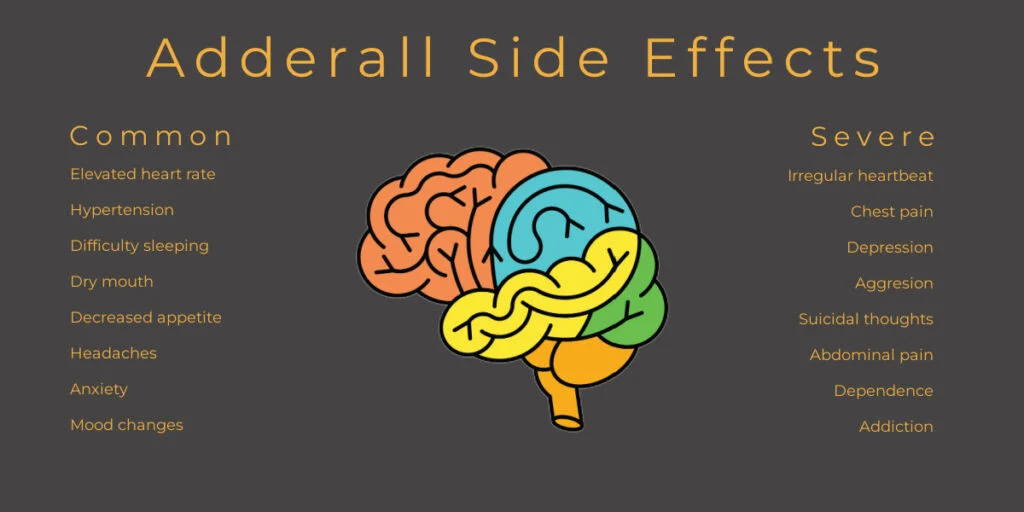
- Floods the brain with dopamine and norepinephrine already at normal levels
- Produces stimulant effects: increased alertness, energy, and euphoria — not calm focus
- Suppresses appetite, sometimes significantly
- Raises heart rate and blood pressure
- Disrupts sleep, especially if taken past midday
- Can cause a “crash” — fatigue, irritability, low mood — as the drug wears off
- Shows no reliable improvement in actual cognitive performance in neurotypical users
How Adderall Affects a Non-ADHD Brain Differently
Here’s the core chemistry: Adderall forces nerve terminals to release stored dopamine and also blocks its reuptake, causing dopamine to accumulate in the synapse at well above-normal concentrations. For an ADHD brain, this brings the system up to a functional baseline. For a non-ADHD brain, it sends dopamine far past that baseline.
That excess dopamine is what creates the euphoric or “wired” sensation many non-ADHD users describe. It can feel like a performance boost — heightened motivation, sharper awareness, reduced distraction — but this perceived sharpness is not the same as actual cognitive enhancement. Research on healthy college students shows that moderate Adderall doses may modestly improve sustained attention but have minimal effect on complex tasks like memory recall, reading comprehension, and executive function.
The brain’s own regulation responds to the dopamine flood by downregulating receptors — meaning repeated use can actually lower your natural baseline dopamine sensitivity over time.
Does Adderall Make You Smarter If You Don’t Have ADHD?
No — and this is one of the most widespread myths about the drug. Despite its reputation as a “smart drug” among students and knowledge workers, controlled studies consistently fail to show meaningful cognitive improvement in neurotypical individuals.
What Adderall does do is make studying feel less aversive and more engaging — because elevated dopamine increases motivation and task salience. Users often feel like they’re performing better. But when performance is actually measured — exam scores, problem-solving accuracy, reading comprehension — the improvement is negligible or absent. In some studies, non-ADHD users taking stimulants actually showed decreased performance on complex cognitive tasks due to erratic thinking patterns the excess dopamine produces.
The perceived benefit is largely confidence and arousal, not enhanced cognition. This distinction matters enormously if someone is taking genuine academic or occupational risks to use the drug.
Short-Term Effects: What You Actually Feel
When a neurotypical person takes Adderall — particularly at doses calibrated for ADHD treatment (5–30mg) — the typical short-term experience unfolds in distinct phases:
First 30–90 minutes (onset):
- Elevated mood, sometimes euphoric
- Increased alertness and energy
- Reduced hunger
- Faster heartbeat, possible dry mouth
Peak effects (1–4 hours):
- Heightened focus — though often misdirected toward whatever is immediately interesting rather than the task at hand
- Suppressed appetite often becomes total disinterest in eating
- Possible anxiety, restlessness, or mild paranoia if sensitive to stimulants
Comedown (4–8 hours post-dose):
- Fatigue hits as dopamine returns to below-baseline levels
- Irritability and mood dip, commonly called the “Adderall crash”
- Difficulty focusing — often worse than pre-dose levels for several hours
- Insomnia if the dose was taken after noon
From a real-world perspective: the crash is frequently what catches first-time non-ADHD users off guard. The initial lift feels convincing. The after-effect often doesn’t.
Physical Effects on the Body
Adderall’s impact isn’t limited to the brain — it activates the sympathetic nervous system in ways that affect multiple organ systems simultaneously.
- Cardiovascular: Heart rate and blood pressure both increase. At normal therapeutic doses this is generally manageable in healthy adults, but it places significant strain on anyone with underlying heart conditions.
- Appetite suppression: Amphetamines stimulate the hypothalamus to suppress hunger signals, which is why weight loss is a documented and predictable side effect.
- Temperature regulation: Body temperature can rise, which becomes a risk in hot environments or during physical exertion.
- Seizure threshold: Adderall lowers the threshold at which seizures occur — meaning anyone with a seizure history or susceptibility faces meaningfully elevated risk.
One clinical reality worth understanding: “appropriate doses for the brain may still cause side effects in the heart”. The system-by-system independence of Adderall’s effects means that even doses that feel manageable neurologically can be quietly stressing the cardiovascular system.
Long-Term Risks of Adderall Use Without ADHD
Using Adderall regularly without an ADHD diagnosis compounds risks that don’t apply — or apply less — to supervised therapeutic use.
- Dependence: The dopamine pathway that Adderall repeatedly stimulates is the same pathway involved in addictive behaviour. Regular non-medical use can create psychological dependence.
- Dopamine desensitisation: Over time, chronic overstimulation causes the brain to reduce its natural dopamine receptor density — making it harder to feel motivated, focused, or rewarded without the drug.
- Cardiovascular stress: Long-term elevated blood pressure and heart rate increase lifetime cardiac risk, including cardiomyopathy with extended use.
- Mental health deterioration: Adderall can worsen or trigger anxiety disorders, and in rare cases at high doses, it can precipitate psychosis or paranoia.
- Withdrawal-like crash: Extended users who stop abruptly commonly experience a multi-day period of fatigue, depression, and cognitive fog.
Safety, Legality, and What Australians Need to Know
For Australians, Adderall is not a legally available medication. It is not TGA-approved and cannot be prescribed or dispensed in Australia. Importing it — even with a valid overseas prescription — requires prior approval, and possession without a valid Australian prescription carries serious legal consequences.
This is especially relevant to the “normal person” query, since the majority of non-ADHD Adderall use globally is unsupervised and sourced informally. In Australia, that means sourcing an illegal amphetamine.
Specific safety considerations:
- Never combine Adderall with alcohol — both affect the cardiovascular system and alcohol can mask stimulant overload, making dangerous doses feel manageable
- Do not take Adderall if you have a personal or family history of heart arrhythmia, structural heart disease, or high blood pressure
- Pre-existing anxiety disorders are significantly aggravated — even at low doses
Common Misconceptions About Adderall and “Normal” People
Myth 1: “It works the same way for everyone — just stronger for ADHD.”Completely false. The neurological response is qualitatively different. An ADHD brain reaches functional baseline; a non-ADHD brain is pushed into overstimulation. The experience, the cognitive effects, and the risk profile are meaningfully different — not just a matter of degree.
Myth 2: “If it calms someone down, that proves they have ADHD.”This is a persistent myth, particularly among people who self-test with Adderall. Adderall’s calming effect is dose-dependent, not diagnostic. At low doses, even neurotypical users can feel “focused calm.” At higher doses, the same person will feel jittery and anxious. The response tells you nothing reliable about whether someone has ADHD.
Myth 3: “Students who use Adderall perform better academically.”Research does not support this. Studies on neurotypical college students show no significant improvement in GPA, exam performance, or reading comprehension from Adderall use. What it does increase is the subjective feeling of confidence and effort — which, ironically, can lead users to overestimate the quality of their work.
What to Do If You’re Considering It for Focus or Productivity
If focus, productivity, or cognitive performance is the actual goal, the evidence-based options that consistently outperform unsupervised Adderall use for neurotypical people include:
- Sleep optimisation: Even a single night of poor sleep degrades cognitive performance more than Adderall can recover. Getting 7–9 hours consistently is among the highest-ROI cognitive interventions available.
- Exercise: Aerobic exercise reliably raises baseline dopamine and norepinephrine — the same neurotransmitters Adderall targets — without dependence risk or cardiovascular strain.
- Structured focus systems: Time-blocking, Pomodoro technique, and single-tasking outperform stimulant-assisted multitasking in measured productivity outcomes.
- Seek a proper ADHD assessment if symptoms persist: If focus is a chronic, pervasive problem — not just situational — a formal assessment by a psychiatrist may be worth pursuing. The correct treatment for confirmed ADHD in Australia involves TGA-approved medications under proper supervision.
FAQ — Questions People Also Ask
What does Adderall feel like for a person without ADHD?At therapeutic doses, non-ADHD users typically feel increased alertness, elevated mood, reduced hunger, and heightened (though not always useful) focus. Some describe it as feeling “wired” or intensely motivated. The experience tends to be more stimulant-like than the calm clarity ADHD users report — and is followed by a noticeable crash as the drug wears off.
Can a normal person become addicted to Adderall?Yes — and arguably more easily than someone with ADHD under medical supervision. The dopamine surge Adderall produces in a non-ADHD brain is more intense (because it starts from a normal baseline), making the euphoric reinforcement stronger. Regular non-medical use carries genuine dependence risk.
Does Adderall actually improve focus in people without ADHD?It improves sustained attention modestly — meaning you’re less likely to get distracted. But it does not improve the quality of thinking, problem-solving, or memory in neurotypical people. Users often redirect their focus onto whatever feels most interesting in the moment, which is not always the task they intended to work on.
Why does Adderall cause a crash?The crash occurs because Adderall forces neurons to release dopamine stores faster than they can be replenished. Once the drug clears, dopamine drops below pre-dose levels, causing fatigue, low mood, and difficulty concentrating. This below-baseline trough is the body’s compensation for the earlier overstimulation.
Is it dangerous to take Adderall once without ADHD?A single low dose is unlikely to cause serious harm in a healthy adult with no heart conditions. However, the cardiovascular effects — elevated heart rate and blood pressure — are real even on first use, and people with undiagnosed cardiac conditions have experienced serious adverse events. “Safe once” is not a guarantee; it’s a probability statement with unquantified individual risk.
What happens to your brain long-term if you use Adderall without ADHD?Repeated non-medical use can reduce natural dopamine receptor density, making it harder to feel motivated or rewarded without the drug. It may worsen baseline focus and mood once use stops, and can increase risk of anxiety disorders and, in rare high-dose cases, stimulant-induced psychosis.
Does Adderall affect everyone the same way?No. Individual response varies significantly based on genetics (particularly CYP2D6 enzyme activity, which affects how quickly amphetamines are metabolised), body weight, existing mental health conditions, and sleep state at the time of dosing. Two people taking the same dose can have meaningfully different experiences.
The Real Picture
Adderall in a non-ADHD person produces genuine stimulant effects — but not the cognitive superpowers the drug’s reputation suggests. The dopamine flood feels productive, but measured performance rarely backs up the feeling. The risks — cardiovascular strain, dependence, crash effects, and long-term receptor changes — are real and not offset by meaningful cognitive gain. For Australians, this conversation also has a legal dimension: Adderall is not available here, and sourcing it informally means handling an illegal amphetamine. If genuine cognitive struggles are driving the question, an ADHD assessment through a registered Australian psychiatrist is the right next step.
What does Adderall do to a normal person Hobart
What does Adderall do to a normal person Devonport
What does Adderall do to a normal person Launceston
What does Adderall do to a normal person Tasmania
What does Adderall do to a normal person Victoria
What does Adderall do to a normal person Queensland
What does Adderall do to a normal person Canberra
What does Adderall do to a normal person Australian Capital Territory
What does Adderall do to a normal person South Australia
What does Adderall do to a normal person New South Wales
What does Adderall do to a normal person Darwin
What does Adderall do to a normal person Ghan
What does Adderall do to a normal person Northern Territory
What does Adderall do to a normal person Australia
What does Adderall do to a normal person Austria
What does Adderall do to a normal person Germany
What does Adderall do to a normal person United Kingdom
What does Adderall do to a normal person Sweden
What does Adderall do to a normal person Denmark
What does Adderall do to a normal person Norway
What does Adderall do to a normal person Finland
What does Adderall do to a normal person Iceland
What does Adderall do to a normal person Netherlands
What does Adderall do to a normal person Spain
What does Adderall do to a normal person Ireland
What does Adderall do to a normal person Switzerland
