
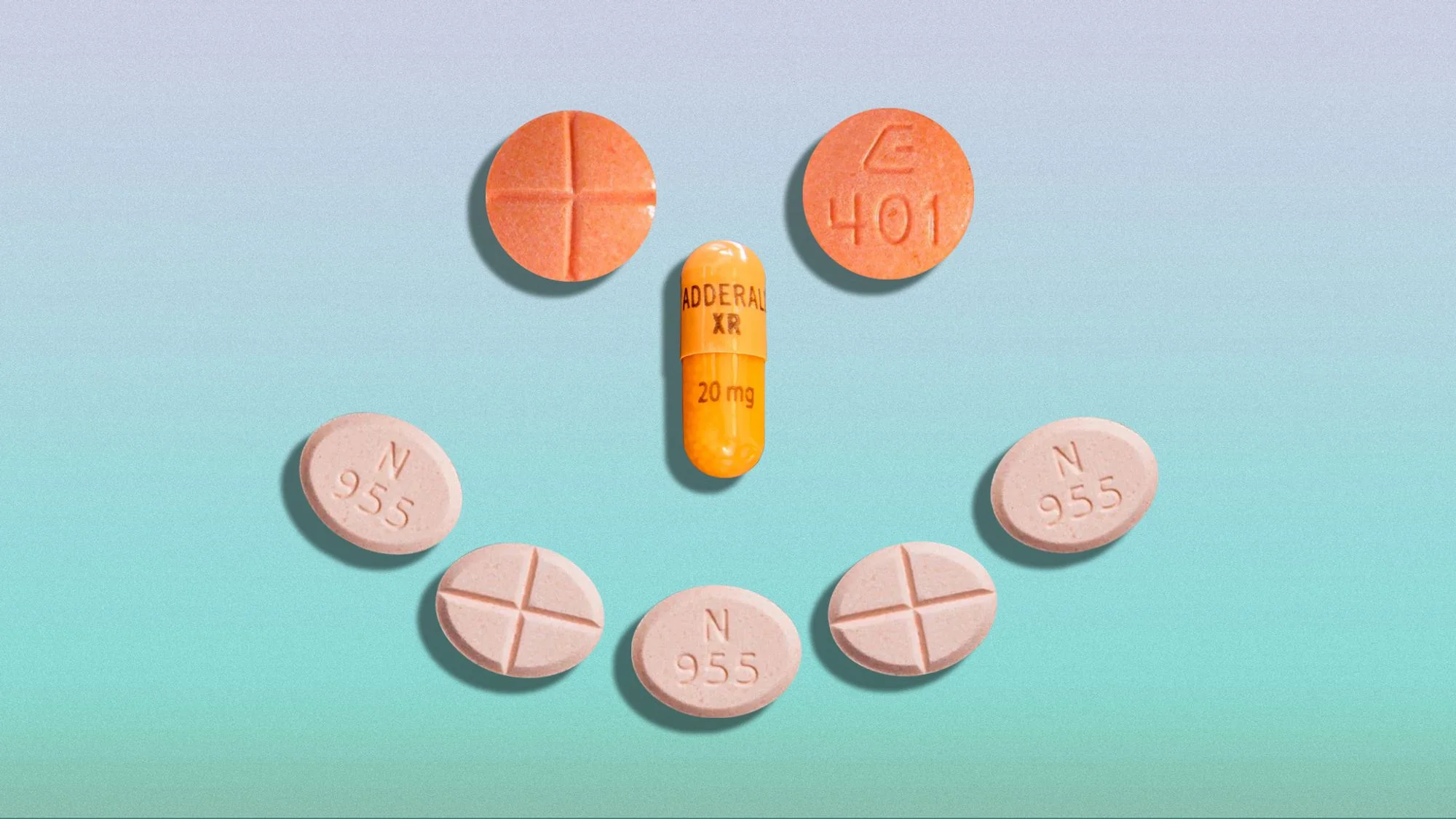
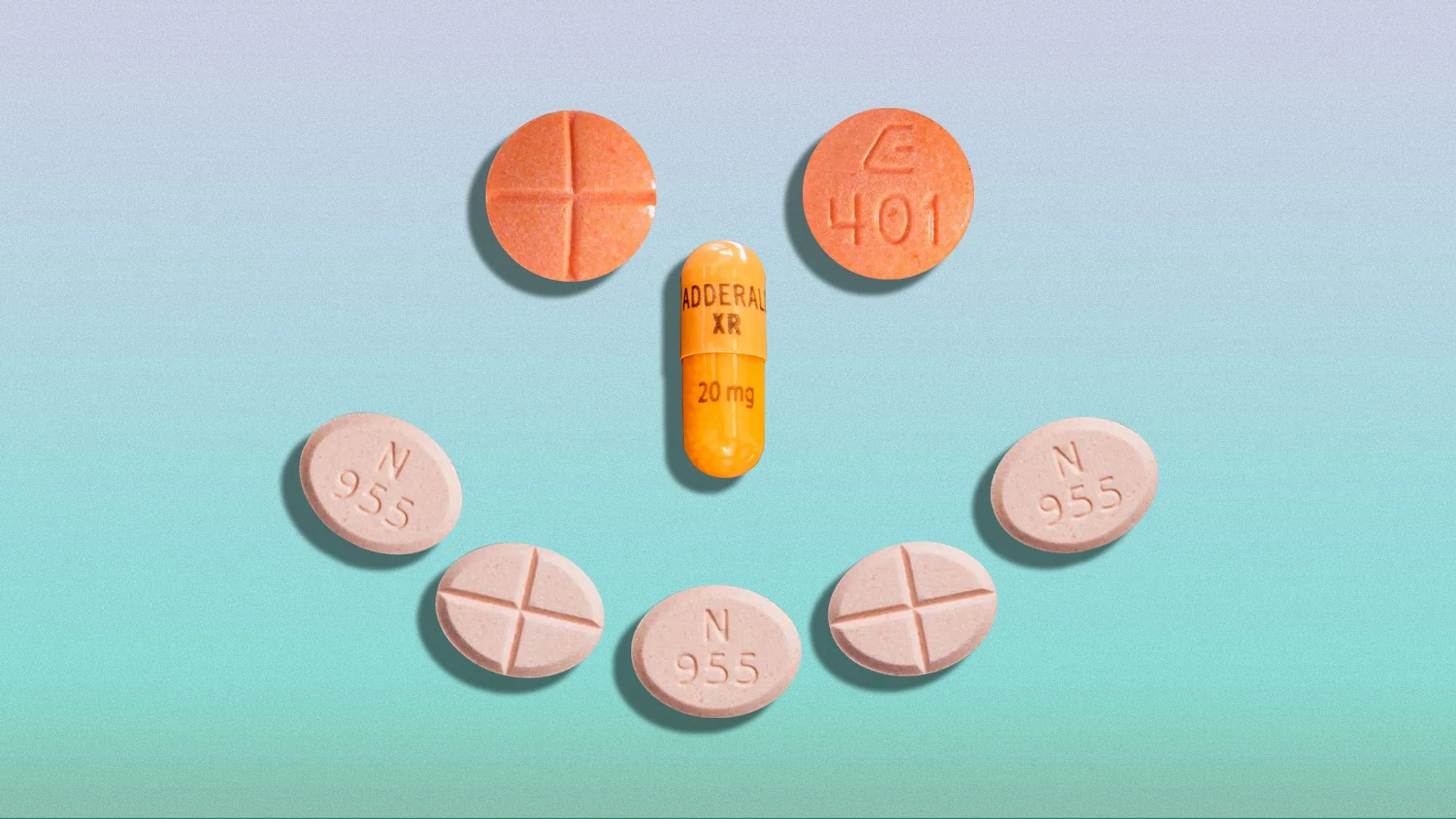
Adderall was invented in the United States — specifically formulated by Richwood Pharmaceuticals in 1994 from a reformulation of an existing weight-loss drug called Obetrol, and received formal FDA approval on 13 February 1996. However, the deeper history of Adderall’s key ingredient — amphetamine — begins more than a century earlier and a world away: amphetamine was first synthesised on 18 January 1887 in Berlin, Germany, by Romanian chemistry doctoral student Lazăr Edeleanu at the Friedrich-Wilhelms-Universität (now Humboldt University). For Australians: Adderall itself has never been registered in Australia by the TGA, but its active ingredient — dexamphetamine (pure d-amphetamine) — has been available in Australia since the 1980s, predating Adderall’s US invention by over a decade.
Introduction
Understanding where Adderall was invented requires separating two distinct histories: the history of amphetamine (the core active molecule), and the history of Adderall as a specific branded pharmaceutical formulation. These are not the same story, and they happened in different countries, different decades, and for entirely different reasons.
The amphetamine molecule was born in Germany in the 1880s. It was commercially developed in the United States in the 1930s. Adderall as a specific mixed-amphetamine-salt product was created in the US in the 1990s. And Australia — despite being one of the world’s most stringent pharmaceutical regulators — was an early adopter of dexamphetamine for clinical use, long before Adderall existed as a brand. This article tells the complete story from origin to present day, with specific reference to what this history means for Australian patients, prescribers, and regulators.
The Origin Story: Where Amphetamine Was First Invented
18 January 1887 — Berlin, Germany: Lazăr Edeleanu
The founding moment of Adderall’s history occurred not in the United States, but in a university laboratory in Berlin:
- Lazăr Edeleanu (also spelled Lazar Edeleanu) — a Romanian chemist completing his doctoral studies at the Friedrich-Wilhelms-Universität Berlin — synthesised alpha-methyl-phenethylamine (amphetamine) on 18 January 1887
- Wikipedia on Edeleanu: “He is known for being the first chemist to synthesise amphetamine at the University of Berlin”
- McGill University’s Office for Science and Society: “First synthesised by Lazar Edeleanu in Germany in 1887, amphetamine remained quietly under the radar until it came to the attention of chemist Gordon Alles in 1929″
- The synthesis was primarily a laboratory exercise in organic chemistry — Edeleanu noted the compound but did not investigate its pharmacological properties or pursue any patent
- Wikidoc: “Amphetamine was first synthesised in 1887 by Lazar Edeleanu at the University of Berlin”
- American Chemical Society: “Amphetamine’s potential medical use wasn’t explored until 1929, when amphetamine was re-synthesised by American chemist Gordon Alles” — confirming the 42-year gap between synthesis and pharmacological investigation
1887–1929: 42 Years of Scientific Dormancy
- Between Edeleanu’s 1887 synthesis in Berlin and Gordon Alles’ independent re-synthesis in 1929, amphetamine was essentially unknown pharmacologically
- PMC pharmacological history of amphetamine: “Although racemic α-methylphenethylamine (amphetamine) was discovered by Barger and Dale in 1910 [as a theoretical compound], it was not until 1927 that this molecule was first synthesised” by Alles’ group
- Note on dating: Various sources give Alles’ re-synthesis as 1927, 1929, or confirm both — he began research in 1927, self-administered in 1929
1929 — Los Angeles, USA: Gordon Alles and the Discovery of Amphetamine’s Effects
The moment when amphetamine’s pharmacological power was recognised happened in Los Angeles, California:
- Gordon Alles — described by Britannica as “American chemist and pharmacologist” — was working in a Los Angeles allergist’s office in 1929, searching for a synthetic replacement for ephedrine (an asthma drug then in short supply from Chinese botanical sources)
- PMC: “In 1927, ephedrine, an extract from the ephedra plant used to treat asthma, was in short supply, and Gordon Alles, a British University of California Los Angeles (UCLA) graduate student, was given the task of synthesising it”
- Alles synthesised beta-phenylisopropylamine — and in what became one of the most consequential acts of self-experimentation in pharmacological history, injected himself with 50 mg of the compound in 1929
- American Chemical Society C&EN: “In 1929, Gordon Alles, a 27-year-old chemist working in an allergist’s shop in Los Angeles, had a physician friend inject him with 50 mg of his latest creation”
- McGill University: “To test its safety, he took amphetamine himself, noting only a ‘feeling of well being’ as a side effect”
- After further animal testing and human trials, Alles patented amphetamine sulfate and in 1932 sold the rights to the Philadelphia pharmaceutical firm Smith, Kline and French (SKF)
1932–1935: The Benzedrine Inhaler — The First Commercial Amphetamine Product
- Smith, Kline and French marketed amphetamine as Benzedrine Inhaler from 1933–1934 — an over-the-counter nasal decongestant
- The inhalers were immediately misused: “Breaking open the inhalers and consuming the contents provided a feeling of exhilaration!”
- SKF then launched Benzedrine Sulfate tablets in 1938 — marketed initially as an antidepressant
- Congress60.org: “Alles sold the rights to the Philadelphia drug firm Smith, Kline and French, which began marketing it as the first anti-depressant in 1938, under the brand-name of Benzedrine tablets”
1950s–1960s: Obetrol — The Direct Precursor to Adderall
The direct pharmaceutical ancestor of Adderall was born in this era:
- Obetrol was a mixed amphetamine and methamphetamine salt formulation developed and marketed as a weight-loss medication in the 1950s and 1960s by Rexar Pharmaceuticals
- Obetrol’s original composition included amphetamine salts AND two methamphetamine salts
- Psychedelics Today: “The roots of Adderall trace back to Obetrol, a weight-loss stimulant”
- Following widespread amphetamine abuse, the FDA tightened controls on amphetamines in 1965, limiting them to prescription use
1973: Obetrol Withdrawn Under the Kefauver-Harris Amendment
- The Kefauver-Harris Drug Efficacy Amendment (passed 1962 in response to the thalidomide disaster) required manufacturers to prove their drugs were both safe AND effective — Obetrol failed to meet the new efficacy standards and was withdrawn from the US market in 1973
- Rexar then reformulated Obetrol, removing the two methamphetamine components and replacing them with dextroamphetamine and amphetamine salts in equal proportion — keeping the Obetrol brand name
- Wikipedia on Obetrol: “Because FDA considered combinations of amphetamine and dextroamphetamine salt a single entity, Rexar simply reformulated Obetrol to exclude methamphetamine salts and continued to sell this new formulation under the same Obetrol brand name”
1994 — United States: The Invention of Adderall as We Know It
Adderall was specifically invented — as a brand name and reformulated product — in the United States in 1994:
Richwood Pharmaceuticals Acquires Rexar (1994)
- In 1994, Richwood Pharmaceuticals — a Kentucky-based pharmaceutical company — acquired Rexar and all rights to the Obetrol formulation
- Richwood recognised the potential of Obetrol’s mixed amphetamine salts formulation for ADHD treatment — a therapeutic category gaining enormous attention in US medicine at the time
- Injuredcare: “In 1994, Richwood Pharmaceuticals acquired Rexar, renamed Obetrol as ‘Adderall’ (a contraction of ‘A.D.D. for All’) and began marketing it for the treatment of attention deficit disorder”
- The name “Adderall” was specifically coined as a marketing contraction of “Attention Deficit Disorder for All” — signalling its intended broad use across age groups
Richwood’s FDA Warning and Resubmission (1994–1996)
- When Richwood began marketing Adderall in 1994 without new FDA approval, the FDA issued a warning:
- Wikipedia on Obetrol: “This new unapproved formulation was later rebranded and sold as Adderall by Richwood after it acquired Rexar, resulting in an FDA warning in 1994“
- Richwood responded by formally resubmitting the formulation as New Drug Application (NDA) 11-522 with full safety and efficacy data
- Safe Harbor Treatment Center: “After discussions with the FDA, Adderall was formally re-approved in 1996 for the treatment of ADHD. Interestingly, it was still not entirely clear if the medication was effective in treating ADHD”
13 February 1996: FDA Official Approval of Adderall
- FDA approval date: 13 February 1996 — Adderall (mixed amphetamine salts) was officially approved by the FDA for the treatment of ADHD
- The FDA prescribing label (NDA 011522) confirmed Adderall’s approved indications as ADHD and narcolepsy
- Legacy Freedom: “Adderall first became available in 1996 when it was introduced by Richwood Pharmaceuticals, which later merged with Shire Pharmaceuticals”
- The New York Times: “Adderall was introduced to the market in 1996 as a more effective and longer-lasting option for ADHD” than methylphenidate (Ritalin), which had dominated prior
Adderall’s Composition: What Was Actually Invented
The specific formulation of Adderall that Richwood created from Obetrol contains four amphetamine salts in specific ratios:
- 25% Dextroamphetamine sulfate
- 25% Dextroamphetamine saccharine
- 25% Amphetamine sulfate (racemic — equal d- and l-)
- 25% Amphetamine aspartate monohydrate (racemic)
The net result by enantiomer composition:
- ~75% d-amphetamine (dextroamphetamine)
- ~25% l-amphetamine (levoamphetamine)
SingleCare: “Adderall is made from a mixture of amphetamine and dextroamphetamine along with other inactive ingredients that may vary by manufacturer”.
Post-1996: Key Milestones in Adderall’s History
1997: Shire Acquires Richwood Pharmaceuticals
- Shire Pharmaceuticals — a UK-based multinational — acquired Richwood in 1997, gaining control of the Adderall brand
- Under Shire, Adderall became one of the most aggressively marketed pharmaceutical products in US history
2002: Adderall XR Extended-Release Approved
- The FDA approved Adderall XR (Extended Release) in 2002 — a once-daily formulation using a bead delivery system
- Safe Harbor: “In 2002, the FDA approved a long-acting, once-daily formulation (Adderall XR)“
- Adderall XR used a dual-bead system: 50% immediate-release beads and 50% delayed-release beads, providing an approximate 10–12 hour duration of action
2007: Shire Launches Vyvanse (Lisdexamfetamine)
- To extend patent protection, Shire developed Vyvanse (lisdexamfetamine) — a prodrug that is pharmacologically inert until converted to d-amphetamine in the bloodstream
- Vyvanse was the product that Shire subsequently registered in Australia, bringing d-amphetamine-based treatment into the Australian market via the PBS
2023: Vyvanse US Patent Expiry — Adderall XR Generics Expand
- Vyvanse’s US patent expired in 2023, opening the global generic market
- The Guardian (Australia, 2024): “Alternative medications like Adderall XR are being developed by other companies, but these require approval in Australia” — the first credible signal of a possible future Australian registration
The Australian Dimension: Why Adderall’s US Invention Never Reached Australia
For Australian readers, the history of Adderall’s invention directly explains its unavailability in Australia today:
Australia Had Dexamphetamine Before Adderall Existed
- Dexamphetamine (pure d-amphetamine) was listed on Australia’s Pharmaceutical Benefits Scheme (PBS) and used clinically in Australia from the 1980s — predating Adderall’s 1996 FDA approval by over a decade
- Medical Journal of Australia (2002): “Dexamphetamine is the only psychostimulant available through Australia’s PBS” — confirming it was the established treatment by the time Adderall was invented
- When Richwood invented Adderall in 1994 specifically for the US ADHD market, Australia already had a functional amphetamine-based treatment framework
No Sponsor Ever Applied for Australian TGA Registration
- Because Adderall was a US domestic commercial innovation by Richwood Pharmaceuticals, it was created for and marketed in the US market — where the commercial incentive was enormous (a market of 330 million)
- The TGA confirmed: “The TGA cannot compel the sponsor to make an application” — and no pharmaceutical company ever submitted Adderall for Australian ARTG registration
- Reddit’s r/ausadhd community (November 2025): “There isn’t a compelling reason to pursue approval in Australia since Adderall is very similar to dextroamphetamine — and Australia already has dexamphetamine and Vyvanse”
The Global Parallel: Adderall Was Primarily a US Pharmaceutical Invention
- Graymatter Labs’ global Adderall ban tracker notes: Adderall was created for and has remained primarily a North American pharmaceutical product
- The European Medicines Agency (EMA) — covering the UK, EU — never approved Adderall, making Australia’s position consistent with the rest of the non-North American world
- Graymatter: “The EMA never approved Adderall due to addiction risk concerns” — the same regulatory caution about mixed amphetamine salts that shaped Australia’s position
The Complete Adderall Invention Timeline
FAQ — Where Was Adderall Invented?
Where was Adderall invented?
Adderall as a branded pharmaceutical was invented in the United States — specifically by Richwood Pharmaceuticals in Kentucky in 1994 when it acquired Rexar’s Obetrol formulation and rebranded it as Adderall for ADHD treatment. The underlying active molecule, amphetamine, was first synthesised in Berlin, Germany in 1887 by Romanian chemist Lazăr Edeleanu.
Who invented Adderall?
The Adderall brand and formulation was created by Richwood Pharmaceuticals in 1994 — specifically by reformulating Rexar’s existing Obetrol (mixed amphetamine salts) product and renaming it for the ADHD market. The original amphetamine molecule was first synthesised by Lazăr Edeleanu (1887, Berlin) and later pharmacologically characterised by Gordon Alles (1929, Los Angeles).
When was Adderall invented?
Adderall’s name and ADHD-specific formulation was created in 1994. It received official FDA approval on 13 February 1996. Its precursor medication, Obetrol, dates to the 1950s–1960s. The underlying molecule, amphetamine, was invented in 1887.
What was Adderall originally invented for?
The Obetrol formulation that became Adderall was originally developed as a weight-loss medication in the 1950s–1960s. When Richwood acquired it in 1994, it was reformulated and rebranded specifically for ADHD treatment. The name “Adderall” is a contraction of “A.D.D. for All”.
Why was Adderall not invented in Australia?
Adderall was a US commercial invention specifically targeting the US ADHD pharmaceutical market — where Richwood and later Shire Pharmaceuticals had the commercial infrastructure and incentive. Australia already had dexamphetamine on the PBS from the 1980s, predating Adderall’s existence. No Australian or international sponsor has ever submitted an ARTG application to have Adderall registered in Australia.
Is the amphetamine in Adderall the same as what is in Australian ADHD medications?
Yes — dexamphetamine available in Australia is the same d-amphetamine molecule that constitutes 75% of Adderall’s active composition. Vyvanse (lisdexamfetamine) is converted to the same d-amphetamine in the bloodstream. Australian patients on dexamphetamine are pharmacologically accessing the primary active component of Adderall under a different brand name.
The Bottom Line
Adderall was invented in the United States in 1994 by Richwood Pharmaceuticals — a reformulation of the 1950s weight-loss drug Obetrol, renamed and repositioned for ADHD treatment — and received FDA approval on 13 February 1996. The underlying active molecule, amphetamine, has a far older origin: first synthesised in Berlin, Germany on 18 January 1887by Romanian chemist Lazăr Edeleanu, and pharmacologically characterised in Los Angeles in 1929 by Gordon Alles. For Australians, the most important contextual fact is that dexamphetamine — the primary active component of Adderall — was available in Australia from the 1980s, before Adderall was invented. Adderall never reached Australia not because Australia prohibited it, but because no pharmaceutical company ever submitted a TGA registration application for the mixed amphetamine salts formulation — largely because the Australian market already had pharmacologically equivalent alternatives and the commercial incentive was insufficient. That calculus may be changing: following Vyvanse’s US patent expiry in 2023, The Guardian reported that generic Adderall XR alternatives “are being developed by other companies, but require approval in Australia” — suggesting an ARTG application may eventually arrive.
Where was adderall invented Hobart
Where was adderall invented Devonport
Where was adderall invented Launceston
Where was adderall invented Tasmania
Where was adderall invented Victoria
Where was adderall invented Queensland
Where was adderall invented Canberra
Where was adderall invented Australian Capital Territory
Where was adderall invented South Australia
Where was adderall invented New South Wales
Where was adderall invented Darwin
Where was adderall invented Ghan
Where was adderall invented Northern Territory
Where was adderall invented Australia
Where was adderall invented Austria
Where was adderall invented Germany
Where was adderall invented United Kingdom
Where was adderall invented Sweden
Where was adderall invented Denmark
Where was adderall invented Norway
Where was adderall invented Finland
Where was adderall invented Iceland
Where was adderall invented Netherlands
Where was adderall invented Spain
Where was adderall invented Ireland
Where was adderall invented Switzerland
