
Recovery from Adderall occurs in distinct phases: acute physical symptoms (fatigue, depression, hypersomnia) resolve in 1–2 weeks for most prescribed users; the psychological and cognitive layer (brain fog, low motivation, flat affect) stabilises over 1–3 months; and the deepest level — dopamine receptor and neurological recovery — continues measurably for 6–18 months, with neuroimaging studies showing dopamine transporter levels returning to near-normal at approximately 14 months of abstinence. Recovery timelines scale directly with duration of use, dose, and whether Adderall was used as prescribed or misused — a patient stopping a short prescription at therapeutic doses may feel fully normal within 2–4 weeks, while someone ending years of high-dose misuse may experience residual Post-Acute Withdrawal Syndrome (PAWS) for up to 2 years.
Introduction
Recovery from Adderall is not a single event — it is a layered biological process that unfolds across multiple timescales simultaneously. The body’s withdrawal symptoms resolve relatively quickly; the brain’s dopamine system repair takes considerably longer; and the cognitive rebuilding — the retraining of focus, motivation, and executive function to operate without stimulant support — continues through and beyond the neurochemical recovery phase.
Understanding exactly which layer you are recovering from and how long each layer takes matters enormously for setting realistic expectations, knowing when symptoms indicate a medical concern rather than normal recovery, and making decisions about whether to restart a prescription, switch medications, or pursue Adderall-free ADHD management. This guide provides the complete evidence-anchored answer — from the first 24 hours through the full 18-month neurological restoration arc — calibrated separately for prescribed users and those recovering from heavy or misuse-level use.
The Three Layers of Adderall Recovery
Recovery from Adderall operates at three distinct biological levels, each with its own timeline:
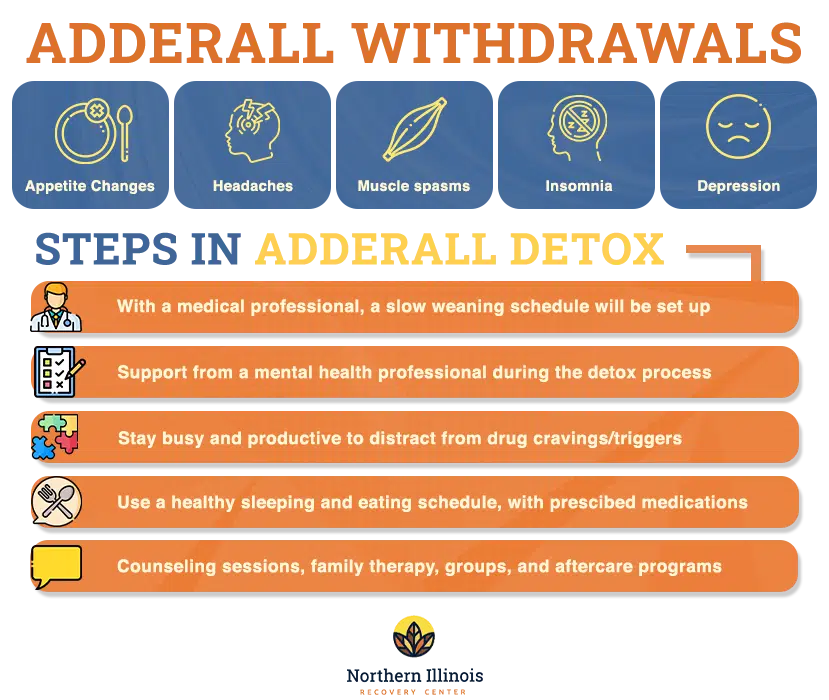
Layer 1 — Physical/Acute Withdrawal: The immediate bodily and neurochemical response to dopamine depletion — fatigue, hypersomnia, appetite changes, headaches
Layer 2 — Psychological/PAWS: The sustained psychological adjustment as the brain relearns baseline dopamine function — depression, anhedonia, brain fog, low motivation, intermittent cravings
Layer 3 — Neurological/Receptor Recovery: The measurable restoration of dopamine receptor density, dopamine transporter availability, and prefrontal cortex metabolic function — detected on PET and fMRI imaging
Each layer responds to different interventions and resolves on a different schedule.
The Complete Adderall Recovery Timeline
Hours 4–24: The Initial Crash Begins
The first signs of recovery — and its difficulty — emerge as Adderall clears the bloodstream:
- Fatigue, irritability, and low mood set in as the dopamine surge reverses
- Increased appetite and food cravings emerge as the appetite suppression effect lifts
- The brain has been operating at artificially elevated dopamine and norepinephrine levels — this sudden drop below baseline is the neurochemical event driving all early symptoms
- Ariaky’s clinical overview states: “The initial crash (24–72 hours): severe fatigue, increased appetite, depression, and intense cravings”
Days 1–14: Acute Withdrawal Phase
The most physically intense period — corresponding to Layer 1 recovery:
- Days 3–5: Peak physical symptoms — extreme fatigue, hypersomnia, deep depression, psychomotor slowing, vivid unpleasant dreams
- Ariaky confirms: “Acute physical symptoms typically peak around days 3–5 and begin to ease within 5 to 7 days. Most physical discomfort resolves in about two weeks“
- The Still Recovery dopamine timeline notes: “Week 1–2 — you’re in the acute withdrawal phase. Dopamine levels are at their lowest. The brain is in crisis mode”
- WebMD confirms the clinical range: “Signs of withdrawal usually show up a day or two after you stop. They may last a few days to several weeks — it’s different for everyone”
What resolves in weeks 1–2:
- Physical fatigue (begins improving by day 5–7)
- Hypersomnia (excessive sleep need normalises)
- Headaches and body aches
- Initial appetite surge (stabilises as body adjusts)
Weeks 2–4: Early Receptor Recovery
Neurochemical recovery becomes measurable:
- The Still Recovery timeline states: “Week 3–4 — measurable increases in D2 receptor density begin appearing on PET scans”
- Physical symptoms largely resolved; psychological symptoms (depression, anhedonia, brain fog) move to the foreground
- Natural energy and motivation begin tentatively returning — but remain below pre-Adderall baseline
- Aware Recovery Care confirms: “Adjustment phase (1–2 weeks): withdrawal symptoms can be intense. Early recovery (1–3 months): the brain’s dopamine response may already begin improving”
- Cravings remain present but typically with decreasing frequency
Months 1–3: Accelerated Neurological Healing
The period of most dramatic measurable brain recovery:
- Still Recovery cites peer-reviewed findings: “A study in Biological Psychiatry found that dopamine receptor availability increased by an average of 12% between months 1–3 of abstinence”
- Recovered.org confirms: “By the one-month mark, individuals typically experience some stabilisation. The brain’s dopamine receptors begin to recover”
- Depression, anxiety, and emotional instability may still be present but are typically improving
- Verve Behavioral Health’s neuroplasticity framework: “Days 46–90: the prefrontal cortex begins to regain its strength — where true ‘rewiring’ happens. Significant recovery of dopamine transporter levels by 90 days”
- Roots Recovery: “Some may recover within weeks, and some could take as long as three months to recover fully” — this describes the typical range for prescribed users at therapeutic doses
Months 3–6: Substantial Cognitive Recovery
Executive function, decision-making, and emotional regulation return to near-functional baseline:
- Still Recovery: “Month 4–6 — neuroimaging studies show that dopamine system function approaches normal parameters for most individuals by this point”
- Recovered.org: “90–180 days — the prefrontal cortex, responsible for decision-making and impulse control, begins to heal. Cognitive abilities and emotion regulation start to improve”
- Anchored Recovery Community: “Research indicates that significant brain recovery often becomes noticeable after approximately 90 days of abstinence, with more substantial healing evident at the one-year mark”
- Cravings typically significantly reduced by month 3–6
- Reddit’s r/StopSpeeding community from recovered heavy users: “By the fourth or fifth month, you’ll begin to stabilise and feel more like yourself”
Months 6–12: Substantial Recovery — Normal Parameters Approaching
The second half of the first year of recovery brings continued but decelerating neurological improvement:
- Still Recovery cites the Volkow et al. research: “Dopamine D2 receptor availability in recovering stimulant users was not significantly different from healthy controls after 4–6 months of sustained abstinence”
- Aware Recovery Care confirms: “Substantial improvement (6–12 months): within a year of abstinence, individuals may experience substantial improvements in previously damaged areas of the brain”
- Brookhaven National Laboratory research (cited by Verve): “Ongoing improvements in prefrontal cortex metabolism — linked to improved decision-making and impulse control — continue for up to a year after the last use”
- The JAMA Psychiatry 2017 systematic review and meta-analysis is the most rigorous cautionary note: “Dopaminergic alterations are marked even in studies of several months’ abstinence, with evidence suggesting that dopamine receptor density and release are still down-regulated after 9 months of abstinence”. This applies primarily to heavy or dependent users — not typical prescribed users.
12–18 Months: Dopamine Transporter Recovery
The final neuroimaging-confirmed milestone:
- Recovery Answers (citing Volkow et al. 2001 neuroimaging data): “After 14 months of abstinence, the brain returns to a more healthy baseline and dopamine transporter (DAT) levels in the reward centre return to a nearly normal level of functioning“
- Verve Behavioral Health: “Studies using fMRI imaging show that after 12 to 14 months of abstinence, dopamine transporter levels in the brain’s reward centres can return to nearly normal levels”
- Nature’s Neuropsychopharmacology (2006 landmark data cited): “Striatal dopamine transporter availability was 20% greater in subjects abstinent 12–17 months compared with those abstinent for only 6 months” — confirming continued improvement through the second year
Beyond 18 Months: Long-Term Optimisation
For heavy, long-term users — full optimisation continues:
- Anchored Recovery: “Some neural adaptations may require several years, especially for those with prolonged, heavy substance use”
- Reddit’s r/StopSpeeding — first-person accounts from heavy users: “It took me roughly 18 months… even at 18 months I was seeing cognitive gains around the 16-month mark”
- Recovered.org: “After one year, the brain’s recovery is more pronounced. Although full recovery may take several years, many individuals report significant improvement”
Recovery Timeline by User Profile
The single most important factor in determining your personal recovery timeline is duration and intensity of use:
Prescribed User at Therapeutic Doses (Short-Term: Under 6 Months)
- Acute withdrawal: 3–7 days
- Full symptom resolution: 2–4 weeks
- Brain recovery: 1–3 months
- Reddit r/ADHD consensus for a user stopping after ~3 months at 10 mg: “For most people, any withdrawal symptoms would be gone by now, especially after less than three months at that dosage… 10 mg for only a few months is like nothing. Your symptoms should be gone after a couple weeks”
Prescribed User at Therapeutic Doses (Long-Term: 1–3+ Years)
- Acute withdrawal: 1–2 weeks
- Psychological recovery (motivation, mood): 1–3 months
- Neurological recovery (receptor density, cognitive function): 3–6 months
- Full optimisation: 6–12 months
Heavy or Misuse-Level Use (High Doses, Years of Use)
- Acute withdrawal: 1–2 weeks
- PAWS (post-acute withdrawal): 6–24 months
- Neuroimaging-confirmed dopamine transporter recovery: 12–18 months
- Full neurological optimisation: 18 months to 2+ years
Post-Acute Withdrawal Syndrome (PAWS): The Layer Most People Don’t Know About
PAWS is the most important concept for understanding why recovery from Adderall can feel incomplete long after acute withdrawal has ended:
What Is PAWS?
PAWS (Post-Acute Withdrawal Syndrome) is a prolonged neurological adjustment syndrome that follows the acute withdrawal phase — caused by the slower-resolving neuroadaptive changes in dopamine receptor density, D2 receptor signalling, and prefrontal cortex function:
- Neuroscience Research Institute: “PAWS causes lingering anxiety, mood changes, and brain fog after addiction. It can emerge weeks after detox, persist for months, and in some cases fluctuate for a year or more“
- The Recover.com: “PAWS commonly lasts 6–24 months, with most improvement in the first 6–12 months”
- Hazelden Betty Ford confirms: “PAWS symptoms can last anywhere from a few months to two years“
PAWS Symptoms in Stimulant Recovery
- Anhedonia — inability to experience pleasure from previously enjoyable activities
- Flat affect — emotional blunting; difficulty feeling the full range of emotions
- Cognitive fog — slowed thinking, difficulty with memory and concentration
- Low motivation and energy — the dopamine-driven motivational system remains below baseline
- Intermittent cravings — triggered by situational cues; episodic rather than constant
- Sleep disturbance — particularly in the early PAWS phase (months 1–3)
- Anxiety — especially in response to tasks that previously required Adderall focus
The Wave Pattern of PAWS
PAWS does not follow a straight line — it fluctuates:
- Neuroscience Research Institute: “PAWS is characterised by periods of relative wellness followed by waves of symptoms”
- This wave pattern is neurobiologically driven — the recovering dopamine system goes through periods of partial normalisation followed by stressor-triggered symptom rebounds
- Understanding that a “bad week” at month 4 does not mean regression — it is part of the normal recovery wave pattern — is clinically important for preventing relapse
The Neuroscience of Recovery: What Is Actually Happening in the Brain
D2 Receptor Upregulation
The primary neurobiological recovery process:
- During Adderall use, the brain downregulates D2 dopamine receptor density in the striatum and prefrontal cortex in response to chronic oversupply
- During abstinence, D2 receptor density increases measurably — “increases of approximately 12% between months 1–3 of abstinence” documented in Biological Psychiatry
- The Volkow et al. research (the gold standard in this area) found D2 receptor availability approached control levels at 4–6 months for most individuals
- JAMA Psychiatry’s 2017 meta-analysis cautioned that “dopamine receptor density and release are still down-regulated after 9 months of abstinence” in some individuals — emphasising that recovery varies significantly by severity of prior use
Dopamine Transporter (DAT) Recovery
A separate but related recovery process:
- Dopamine transporters (DAT) regulate dopamine reuptake and are altered by chronic stimulant use
- Recovery Answers states the 14-month milestone from Volkow’s neuroimaging work: DAT levels “return to a nearly normal level of functioning”
- This is specifically what the 12–14 month milestone represents — not complete recovery, but “nearly normal” DAT function in the reward circuitry
Prefrontal Cortex Metabolic Recovery
The cognitive recovery component:
- The prefrontal cortex — responsible for executive function, impulse control, decision-making, and working memory — shows ongoing metabolic recovery through the first year
- Brookhaven National Laboratory research: “Ongoing improvements in prefrontal cortex metabolism continuing for up to a year after last use”
- Recovered.org: “90–180 days — the prefrontal cortex begins to heal. Cognitive abilities and emotion regulation start to improve”
Exercise and Dopamine Receptor Recovery: The Key Modifiable Accelerant
The 2015 Nature Neuropsychopharmacology study is the most relevant clinical trial for stimulant recovery acceleration:
- Participants with stimulant use disorder were randomised to structured exercise training(1 hour, 3 days/week for 8 weeks) vs. health education
- After 8 weeks, the exercise group showed significant increases in striatal D2/D3 receptor BPND (PET-measured receptor availability) — the education group showed no change
- The study concluded: “Structured exercise training can ameliorate striatal D2/D3 receptor deficits in stimulant users”
- Separately: “Striatal dopamine transporter availability was 20% greater in subjects abstinent 12–17 months vs. 6 months” — confirming that sustained abstinence with time (and exercise) continues to improve the dopamine system
- Reddit’s r/StopSpeeding consensus corroborates: “Engaging in intense activity four to five days a week can not only restore your day but also halve your recovery time“
Factors That Affect Your Personal Recovery Timeline
What Recovery Feels Like: Phase by Phase
Week 1–2: The “Dark” Phase
- Extreme fatigue — the most universally described experience
- Deep, chemical-feeling depression — distinct from regular sadness
- Sleeping 10–14 hours and still exhausted
- Feeling mentally “blank” or “hollowed out”
- This phase is the hardest — but it is time-limited and resolves predictably
Weeks 2–6: The “Flat” Phase
- Physical exhaustion lifting; replaced by flat affect and low motivation
- Brain fog — thinking slowly, difficulty finding words, mild memory impairment
- Activities that were previously enjoyable feel neutral or unrewarding (anhedonia)
- Some days feel almost normal; other days feel like a relapse to week 1
- Reddit r/StopSpeeding: “The initial three months of sobriety can feel like a wild rollercoaster”
Months 2–4: “Window” Phase
- The first “good days” appear — days where mood, energy, and focus feel closer to normal
- Sleep quality improving
- Exercise and social engagement begin producing noticeable mood benefit
- Still Recovery: “Month 2–3 — this is where the most dramatic improvements occur”
Months 4–6: Stabilisation
- Mood more consistently positive; emotional swings reduce
- Cognitive function — attention, memory, decision-making — measurably improving
- Natural energy and motivation returning in a durable (not episodic) way
- Reddit r/StopSpeeding: “By the fourth or fifth month, you’ll begin to stabilise and feel more like yourself”
Months 6–12+: Recovery Consolidation
- Executive function approaching or reaching pre-Adderall levels
- Neuroimaging shows dopamine system close to control levels
- Cravings rare and manageable
- For heavy users: continued cognitive gains through month 16+ reported
Strategies That Accelerate Recovery
Exercise — The Strongest Evidence-Based Accelerant
Structured aerobic exercise is the single most powerful modifiable variable for accelerating dopamine receptor recovery:
- The Nature Neuropsychopharmacology RCT: exercise training produced significant D2/D3 receptor recovery in 8 weeks
- Protocol: 1 hour of vigorous aerobic exercise, 4–5 days/week — the intensity at which dopamine receptor upregulation is most measurable
- “Intense activity four to five days a week can halve your recovery time” per the r/StopSpeeding community consensus
Sleep — The Nightly Recovery Window
Eight to nine hours of consistent, quality sleep is the biochemical foundation of receptor upregulation:
- Dopamine receptor density recovery occurs primarily during sleep
- Consistent sleep schedules accelerate circadian normalisation, which in turn supports dopamine rhythm recovery
Nutrition (Dopamine Precursor Support)
Adequate dietary protein (tyrosine), zinc, magnesium, B vitamins, omega-3 fatty acids, and Vitamin D support the enzymatic pathways of dopamine synthesis and receptor recovery:
- These are cofactors in the dopamine synthesis pathway — deficiencies slow recovery
- Detailed supplement protocols are covered in the companion article on coping with Adderall withdrawal
CBT and Mindfulness
Psychological support accelerates the Layer 2 (PAWS) recovery by providing coping skills for anhedonia, cravings, and the anxiety of functioning without stimulant support:
- CBT-based relapse prevention has the strongest evidence base for stimulant use disorder
- Mindfulness reduces self-reported depression and anxiety during stimulant withdrawal per the 2022 PMC clinical review
Medical Support (Bupropion for Persistent Depression)
For patients whose PAWS-phase depression persists beyond 2–3 months:
- Bupropion (Wellbutrin) — a dopamine and norepinephrine reuptake inhibitor — is the most clinically logical pharmacological support for the dopamine-depleted post-stimulant recovery state
- Reddit r/StopSpeeding: “Get on an antidepressant if it makes you unable to function — that’s what I did after four months off Adderall… I began using Wellbutrin after about eight months of PAWS, and that appeared to help”
- WebMD confirms: “Counselling or antidepressant medicines may help” with severe or prolonged withdrawal depression
FAQ — How Long to Recover From Adderall?
How long does it take to fully recover from Adderall?Recovery timeline depends heavily on use pattern. Short-term prescribed users typically feel fully recovered in 2–4 weeks. Long-term prescribed users generally reach full function in 3–6 months. Heavy or misuse-level users may experience PAWS for 6–24 months, with neuroimaging confirming brain recovery at approximately 12–14 months of abstinence.
How long does dopamine recovery take after Adderall?D2 receptor density begins measurably increasing in weeks 3–4, improves by approximately 12% in months 1–3, approaches control levels at 4–6 months for most individuals, and reaches “nearly normal” dopamine transporter levels at approximately 14 months of abstinence per Volkow et al. neuroimaging research.
What is PAWS and how long does it last after Adderall?Post-Acute Withdrawal Syndrome (PAWS) is a prolonged neurological adjustment characterised by flat affect, low motivation, brain fog, and intermittent cravings — caused by slowly-resolving dopamine receptor downregulation. It commonly lasts 6–24 months, with most improvement in the first 6–12 months.
Does exercise speed up Adderall recovery?Yes — it is the strongest evidence-based accelerant. A peer-reviewed RCT published in Nature Neuropsychopharmacology demonstrated that 8 weeks of structured exercise produced significant increases in striatal D2/D3 receptor availability in stimulant users, while a control group showed no change. Community recovery reports suggest intense exercise 4–5 days/week can halve recovery time.
Is the brain damage from Adderall permanent?For prescribed therapeutic use, the neurological changes are fully reversible — neuroimaging studies show dopamine system parameters returning to near-normal at 14 months of abstinence. Even for heavy misuse-level use, the 2015 Nature study specifically concluded that “methamphetamine-associated deficits in the D2/D3 receptor system are reversible in human subjects”. Recovery is possible at all levels of prior use.
Will I feel normal again after stopping Adderall?Yes — for the vast majority of users. Neuroimaging data confirms that dopamine system function returns to near-normal parameters for most individuals by 4–6 months of abstinence. Long-term prescribed users report feeling fully themselves by months 3–6; former heavy users typically report stabilisation by months 4–6 and continued cognitive gains through month 12–16+.
The Bottom Line
Recovery from Adderall is a layered, multi-timescale process: acute physical symptoms resolve in 1–2 weeks; the psychological adjustment (PAWS — flat affect, low motivation, brain fog) takes 1–6 months depending on use history; and the deepest neurological recovery — measurable dopamine receptor density restoration and dopamine transporter normalisation — continues for 6–18 months, with neuroimaging confirming near-normal brain function at approximately 14 months of abstinence. For prescribed users stopping a therapeutic dose, most will feel fully recovered within 3–6 months. For long-term or heavy users, PAWS can persist for up to 2 years but follows a predictable wave-pattern of gradual improvement rather than a plateau. The most powerful intervention to accelerate recovery across all timescales is structured aerobic exercise — the only intervention with a peer-reviewed RCT demonstrating direct D2/D3 receptor recovery in stimulant users. Combined with adequate sleep, nutrition, and psychological support, the neuroplasticity research consistently confirms: full recovery is achievable, and the brain continues improving well beyond what most patients initially expect.
How long to recover from adderall Hobart
How long to recover from adderall Devonport
How long to recover from adderall Launceston
How long to recover from adderall Tasmania
How long to recover from adderall Victoria
How long to recover from adderall Queensland
How long to recover from adderall Canberra
How long to recover from adderall Australian Capital Territory
How long to recover from adderall South Australia
How long to recover from adderall New South Wales
How long to recover from adderall Darwin
How long to recover from adderall Ghan
How long to recover from adderall Northern Territory
How long to recover from adderall Australia
How long to recover from adderall Austria
How long to recover from adderall Germany
How long to recover from adderall United Kingdom
How long to recover from adderall Sweden
How long to recover from adderall Denmark
How long to recover from adderall Norway
How long to recover from adderall Finland
How long to recover from adderall Iceland
How long to recover from adderall Netherlands
How long to recover from adderall Spain
How long to recover from adderall Ireland
How long to recover from adderall Switzerland
